

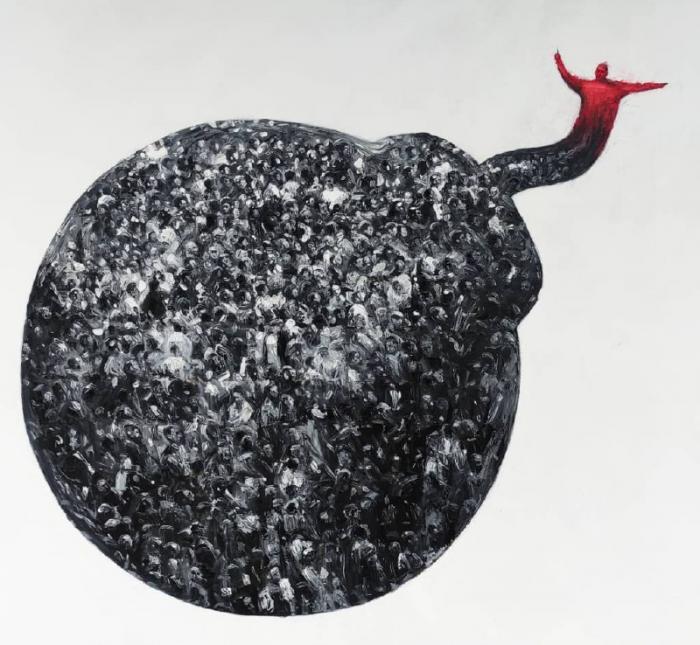
Social media is not neutral. It consists of private infrastructures that organize public discourse to maximize attention, interaction, and engagement. In this ecosystem, any political actor—and particularly violent ones—can find fertile ground to attract supporters, build community, and normalize extremist rhetoric.
Recent reports about the group from South Florida that attempted to infiltrate Cuba, partly through platforms like TikTok, once again highlight a phenomenon that is not new: the use of social media as a space for recruitment, propaganda, and coordination of criminal organizations.
The origin matters. Florida—and especially the far-right political and media ecosystem—has been for decades a public arena heavily biased against Cuba, where hostile rhetoric is rewarded and where, historically, networks and climates have existed that legitimize violent actions under the rhetoric of “liberation.”
To understand how one moves from “stirring up online” to direct action, it is helpful to distinguish between levels. So-called manifestos to violence—in the form of videos, live streams, symbols, and shared codes—serve an identity-building function. They signal belonging to a “cause,” reinforce perceived grievances of a community, and construct an epic narrative. In many cases, the initial contact between these individuals occurs on public platforms, but quickly shifts to more closed spaces: direct messages, private groups, and messaging apps. The truly critical part—coordination for logistics, weaponry, and financing—comes later, and is usually carried out with utmost discretion to minimize risks and cover one's tracks.
In a very short time, social media platforms facilitate actions that don't happen in a neighborhood in broad daylight. A racist or a terrorist is unlikely to shout the same vile things we've seen countless times on social media or Facebook through anonymous accounts, nor will they find a mass of people in their immediate surroundings who openly support them. On the internet, however, the combination of relative anonymity, geographical distance, and lower social cost produces a kind of "disinhibition." That's why we see some users saying outrageous things that, face-to-face, would receive immediate social condemnation.
The platforms' famous algorithm does the rest. It facilitates connections between like-minded individuals, and these "affinity ecosystems" create echo chambers where extremism can become the norm because it is repeated, celebrated, and reinforced without challenge.
This pattern is not unique to the Cuban case. The far right in the United States has clearly demonstrated how these dynamics operate. The attack on the U.S. Capitol on January 6th, 2021, was fueled by a narrative of fraud disseminated and coordinated across various platforms, with cross-circulation between conventional networks and "alternative" spaces. The physical mobilization was the visible result of a prior digital infrastructure that combined propaganda, membership groups, and closed channels where violent actions against the main symbol of U.S. legislative power were coordinated.
That's why the problem isn't the appearance of "an isolated video" or "a lone provocation" on digital platforms. Symbolic violence, when it becomes routine and garners applause, shortens the distance to physical violence, as events demonstrate. This doesn't mean demonizing technology. Social media can also be used to organize legitimate projects, denounce abuses, and build solidarity. But ignoring its use by violent actors is a naiveté that can have serious consequences.


