

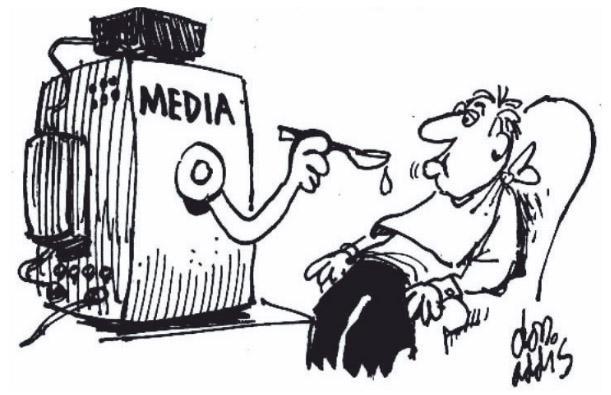
We live in the age of information overload, but, paradoxically, never before have we been so exposed to having our perception of reality molded, limited, or even hijacked.
Every day we consume news, interact on social media, and hold conversations without being aware that there are forces—psychological and communicative—that act as a distorting lens.
Our lives unfold in the digital universe; in its spaces we "converse," shop, study, walk, travel; in its "clouds" we store all our personal information, even our medical history; we entrust it with our most precious, but also our darkest, desires.
We dedicate most of our day to it, and it's always with us: on public transport, in the office, the workshop, the classroom, on the sofa, in bed, in the bathroom. In this synthetic world, we can be whoever we want, however we want: brave, beautiful, intelligent, daring. The shy college friend transforms into a gigolo, a superhero, a cosmonaut—anything.
No effort or dedication is required to get ahead; we leave work and willpower to the manipulators, to those who fabricate the narcotic reality in which we immerse ourselves and lose ourselves.
To understand how reality is constructed (and destroyed), it's necessary to understand three fundamental concepts that operate both in our private lives and in the public arena: gaslighting, framing, and agenda-setting.
These aren't isolated academic terms; they are the tools with which, often unknowingly, we relate to the world—instruments that seek to erode trust, create a sense of imminent collapse, of chaos.
The combination of these three is lethal; if the agenda-setting process decides that certain problems don't exist, framing presents them in a light that favors a select few, and gaslighting makes us doubt the validity of our own perceptions. Thus, citizens are trapped in a digital cave from which escape is very difficult.
It's important to note that these techniques don't operate in a vacuum; they are part of a multifaceted, unconventional war that seeks to dismantle any successful example of resistance and sovereignty.
Recognizing these mechanisms is the first step toward regaining autonomy. Comparing different sources, distrusting absolutes (which everyone seems to think), and, above all, trusting our own judgment when we feel something doesn't add up, are now part of the tools of civic resistance.
As Plato taught us, the path to enlightenment begins when we stop believing that the shadows on the wall are the only possible reality.


