

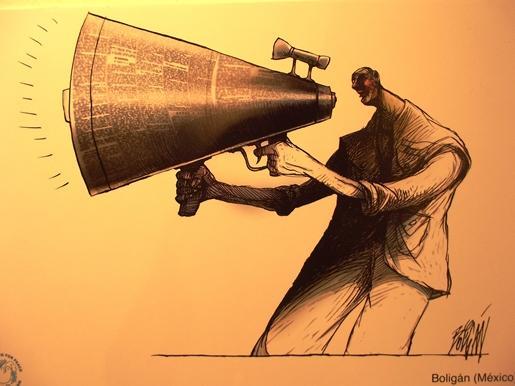
If gaslighting operates on an interpersonal level, agenda setting operates on a media level. Coined by professors Maxwell McCombs and Donald Shaw in the 1970s, this theory argues that mass media don't tell us what to think, but rather what to think about.
In other words, newspapers, television stations, and digital portals wield enormous power by selecting and weighting the day's topics. By giving front-page coverage and hours of debate to an issue, they make it the center of the national conversation. By ignoring another, they condemn it to oblivion.
The sophisticated media machine operating outside Cuba, whose objective is to influence national and international public perception of Cuban reality, constitutes a textbook case of agenda manipulation.
One of its main points or axes manipulates the consequences of the economic blockade imposed by the U.S. to blame the Cuban government. The mechanism is perverse but effective: 1) The blockade generates shortages of fuel, medicine, and food. 2) Media outlets funded by U.S. agencies, labeled as "independent," amplify the discontent resulting from these shortages. 3) The media agenda is saturated with news about lines, product shortages, and transportation breakdowns, attributing the cause exclusively to "internal mismanagement" and omitting the context of the blockade they themselves sponsor.
On the other hand, figures with little real representation on the island are promoted, granting them the status of "opinion leaders,""activists," or "experts." By giving them space in their agendas, international media legitimize them as valid interlocutors.
Cuban reality is presented as inherently hostile to causes such as the fight against racial discrimination or gender equality, in order to sustain a prefabricated narrative of oppression. In this way, an attempt is made to align the agenda of international human rights defenders with the agenda of political destabilization.
While Cuban public media operate with a logic of service and social development, the external media machine operates with a logic of war, financed with multimillion-dollar budgets and without ethical limits in the dissemination of disinformation.
Faced with this strategy, the response cannot be merely defensive. Proactive action is required to restore national media to their role as primary and reliable sources. An effective communications policy must be implemented to place the true attributes of Cuban society—its scientific achievements, social stability, and culture—on the global agenda, breaking the monopoly of the narrative of despair.
Understanding that media manipulation is not a side effect, but a state policy designed to weaken the Revolution from within, using information as a weapon. The battle for the agenda is, ultimately, the battle for conscience and sovereignty.
Sources: La Jiribilla, scielo.sld.cu, USA.unir.net, Revistas uned.es, profesionaldelainformación.com.


