

The conclusion of the "Two Sessions" not only closed China's most important annual political event. It also marked the beginning of a new stage that will define the country's direction in the coming years.
Held between March 4th and 12th, the joint sessions of the 14th National Committee of the Chinese People's Political Consultative Conference and the 14th National People's Congress approved the guiding document for the 15th Five-Year Plan.
More than the formal adoption of the Plan, the very development of the Asian giant implies that the path it has forged has a relevance that transcends China's borders.
The period until 2030 will be "critical for consolidating the foundations and deploying all necessary efforts to fundamentally achieve China's socialist modernization." This was the assessment of Hua Xin, China's ambassador to Cuba, at a recent press conference.
The diplomat offered four sets of concepts that summarize the country's immediate direction: "reform and innovation," "social welfare and human warmth," "green and beautiful," and the combination of "trust and openness." He invited the audience to interpret these as guides for a better understanding of the roadmap of the 15th National Plan.
According to the diplomat, reform and innovation "constitute the main driving force for achieving high-quality development and continuing to advance modernization in the Chinese style."
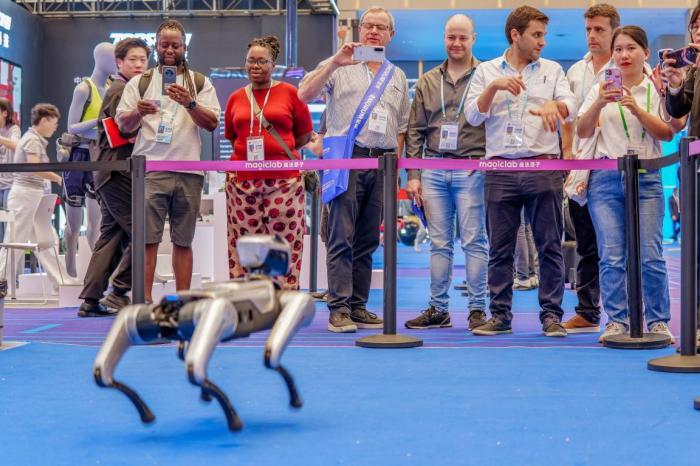
Within this framework, China will maintain its objective of building a high-level socialist market economy, promoting innovation and its integration with other industries to generate high-quality productive forces.
Hua emphasized the focus on social welfare and human warmth. Modernization, she explained, is not limited to economic growth but also involves improving people's quality of life and ensuring that the benefits of development reach more people.
The ambassador highlighted the expanded content dedicated to social welfare in the Government Report—also approved during the "Two Sessions"—which, for the first time, includes the concept of "investing in people."
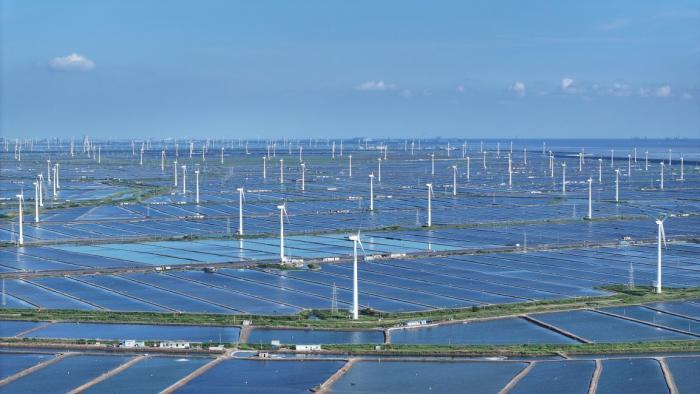
Another element she underscored was "green and beautiful." Amid global environmental challenges, China insists on the need to move toward a more sustainable economy and continue promoting environmentally friendly policies, including reducing carbon emissions and decreasing pollution.
Ideas that are gaining prominence on the Chinese stage include trust and openness. In the current context, marked by serious tensions, these concepts are expressed, among other things, in maintaining stable and pragmatic growth objectives, as well as in the willingness to share with all countries the opportunities arising from its high level of opening up.
These four key concepts provide insight into China's present and future development. Beyond specific goals, they reveal a process that establishes priorities, both domestically and internationally.
The successful implementation of the tasks outlined in the recently concluded 14th National Plan, under the leadership of the Communist Party of China, places the country in a favorable position to embark on a new era. From domestic projections to its relationship with the world, these four key areas define China's direction at a crucial moment for its modernization.


