

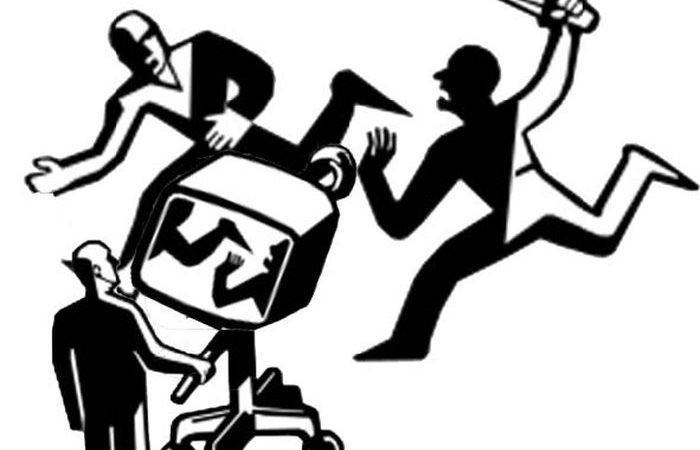
The origins of the concept of framing can be traced back to mid-20th-century psychology. It was the anthropologist and linguist Gregory Bateson who, in 1955, introduced the notion of framing to explain how individuals differentiate between various levels of communication and context, paying attention to some stimuli while disregarding others.
For Bateson, framing is a psychological tool that allows the subject to interpret a message within a specific framework of meaning.
While agenda-setting deals with the transfer of themes or attributes, framing addresses the construction of meaning, the connection of elements to form a coherent argument that promotes a specific interpretation of reality.
The frame selects certain aspects of reality and gives them greater relevance, thus promoting a particular interpretation, a diagnosis, and often a solution; words contain certain information and allow us to recognize, assimilate, and subsequently share it.
An example of this can be found in the treatment of gender-based violence. The same event can be framed as a "crime of passion," which minimizes the violence, or as "femicide."
The choice of words constructs a different reality and, therefore, a distinct social and political response. This is not accidental; it reflects editorial lines, political interests, and the struggle to impose a narrative. Whoever manages to control the framing wins the debate before it even begins.
Likewise, the rise of social media and the digitization of the public sphere have profoundly disrupted the classic tenets of framing.
As Natalia Aruguete points out, in this new environment, the "Network Activated Frames" (NAF) model means that frames are not simply "received," but rather activated, shared, and reinterpreted by users within their social networks.
The flow of meaning is no longer vertical, but horizontal. Users, influenced by the structure of their online communities, interact with media and political content, contributing to amplifying certain narratives while ignoring or challenging others.
On the other hand, the rise of disinformation and fake news has opened a new line of research that connects framing with manipulation strategies. Framing deliberately distorts reality or exploits emotions to polarize public debate.
Framing theory offers an indispensable analytical tool for uncovering the symbolic struggles underlying the construction of current reality. It allows us to understand how media messages not only inform, but also guide, prioritize, and ultimately discipline our perception of the world.
Sources: Inisem. Anahuac.mx, George Lakoff, "Don't Think of an Elephant," Editorial Complutense, Madrid (2007), Maxwell McCombs, "Setting the Agenda," Polity Press, UK, 2004.


