

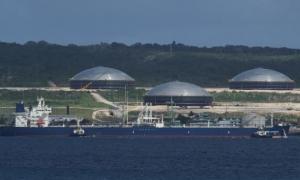
Russian Energy Minister Sergey Tsiviliov said Thursday that Russia is preparing to send a second oil ship to Cuba amid the island's severe energy crisis caused by the U.S. embargo.
"An important meeting was held yesterday in St. Petersburg. Cuban representatives arrived. Cuba is under a total blockade; it is isolated. Where did the oil shipment come from? A Russian vessel broke the blockade. Now the second one is being loaded. We will not leave the Cubans in dire straits," Tsiviliov said.
RUSSIAN OIL ARRIVES IN CUBA
The Russian oil tanker Anatoly Kolodkin arrived in Cuba this week with approximately 100,000 tons of humanitarian aid oil. The vessel is currently in the port of Matanzas and unloading has already begun.
It is the first oil tanker to arrive in Cuba in three months, after the United States forced Venezuela and Mexico to cut off energy supplies to the island. Cuba has not received any oil shipments since January 9, triggering an energy crisis.
Cuban President Miguel Díaz-Canel thanked Russia on Wednesday for its assistance. “Thank you, Russia. Thank you, President Putin. Thank you, crew of the tanker Anatoli Kolodkin, who, upon docking in a Cuban port with their valuable cargo of fuel, bring us the certainty of a friendship tested in the most difficult times, as so often throughout history,” he wrote.
The Cuban leader stated that the unloading of the ship had already begun, and that the processing, distribution, and “rational use of this shipment, which, although insufficient amid the acute shortage, will gradually alleviate the situation in the coming weeks,” would follow.
RUSSIA'S POSITION
Russian presidential spokesman Dmitry Peskov asserted that Moscow is pleased that the first shipment of Russian oil has arrived in the Caribbean nation. Peskov noted that Cuba is "under a very severe blockade" and needs petroleum products and crude oil "for the operation of life support systems in the country, to generate electricity, and to provide medical and other services to the population."
In this context, the spokesman indicated that Russia "considers it its duty" to offer the necessary assistance to Cuba and assured that Moscow will continue working to supply more oil to the island. "We will continue working, I repeat, given the desperate situation in which the Cuban people now find themselves. This, of course, cannot leave us indifferent, so we will continue working on this matter," he stated.
UNITED STATES THREAT TO CUBA
On January 29th, U.S. President Donald Trump signed an executive order declaring a “national emergency” due to the alleged “unusual and extraordinary threat” that, according to Washington, Cuba poses to the security of the United States and the region. The text accuses the Cuban government of aligning itself with “numerous hostile countries,” harboring “transnational terrorist groups,” and allowing the deployment on the island of “sophisticated military and intelligence capabilities” from Russia and China.
Based on these accusations, tariffs were announced on countries that sell oil to Cuba, along with threats of retaliation against those who act against the White House executive order.
The move comes amid escalating tensions between Washington and Havana, which has consistently rejected these allegations and warned that it will defend its territorial integrity. The Cuban president responded that "this new measure demonstrates the fascist, criminal, and genocidal nature of a cabal that has hijacked the interests of the American people for purely personal gain."
On March 7th, Trump announced that "a great change is coming soon to Cuba," which, he added, is "reaching the end of the road."
The United States has maintained an economic and commercial embargo against Cuba for more than six decades. The embargo, which severely impacts the country's economy, has now been reinforced with numerous coercive and unilateral measures by the White House.


