

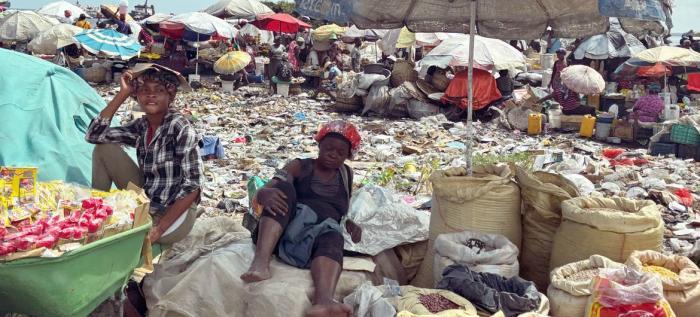
Nearly 58% of the global workforce operates in the informal sector, and some 284 million wage earners live in extreme poverty, prone to physical and mental ailments, the ILO revealed.
Persistent deficits are undermining social cohesion and economic resilience, stated Gilbert F. Houngbo, Director-General of the International Labour Organization (ILO), in remarks delivered at the Spring Meetings of the International Monetary Fund (IMF) and the World Bank in April of this year.
For low- and middle-income countries, the situation is likely to worsen. Rising sovereign debt, limited fiscal space, and economic uncertainty are restricting governments’ ability to support workers and strengthen labor markets, the official argued.
Even rich countries have pockets of precariousness and unemployment, since, ultimately, capitalism needs a reserve army of labor for the system to function under the rules of the market economy.
According to ILO projections, the global unemployment rate will remain at 4.9 percent in 2026, equivalent to 186 million people, while another 2.1 billion will continue to work in informal jobs, lacking social protection.
Having a steady job does not guarantee well-being; nearly 300 million workers remain in extreme poverty, earning less than three dollars a day, according to the United Nations (UN) agency.
In the document Social and Employment Trends 2026, the agency also warned that the youth unemployment rate rose to 12.4% in 2025, with around 260 million young people neither studying, working, nor receiving training.
According to the report, the rise of artificial intelligence (AI) and automation could exacerbate these challenges, particularly for young people with higher education in high-income countries who are seeking their first job in highly skilled occupations.
"Unless governments, employers, and workers act together to harness technology responsibly and expand quality employment opportunities for women and young people […], decent work deficits will persist and social cohesion will be jeopardized," Houngbo stated.
Various workplaces also harm human health due to design and management flaws. Annually, more than 840,000 people die from conditions related to long working hours, workplace insecurity, and harassment, the ILO stated in its report The Psychosocial Environment at Work: Global Progress and Pathways for Action.
These phenomena generate annual economic losses equivalent to 1.37% of global gross domestic product, the source indicated, taking into account the effects of cardiovascular, metabolic, and mental health conditions (including depression and anxiety), as well as musculoskeletal disorders and sleep disturbances.
Advances in digitalization, the use of AI, remote work, and new forms of employment are reshaping the workplace. These changes can intensify existing threats or create new ones if not properly addressed, the report noted.
According to international expert Olivier De Schutter, the current model "is neither realistic nor sustainable, and is often counterproductive," as he stated on April 22 while presenting a Roadmap for Poverty Eradication Beyond Growth, the result of contributions from more than 400 specialists from the UN system, academia, governments, civil society, and trade unions.
For decades, he noted, the dominant narrative has been that economic growth is the only way out of poverty. "However, the global economy we have built channels immense wealth into the hands of a small elite, weakens democratic institutions, and traps millions in low-paying jobs."
This dynamic is based “on the plundering of natural resources and cheap labor in the Global South, and has caused irreparable damage to the planet,” added the UN Special Rapporteur on extreme poverty and human rights.
Ending extreme poverty is one of the most urgent challenges facing humanity, but "it will remain out of reach unless we are willing to rethink the economic assumptions that have misguided policies for generations," argued De Schutter.
A fair and equitable distribution of wealth is not only possible, it is essential. What is happening in the world of work could inspire global struggles against such abuses.


