

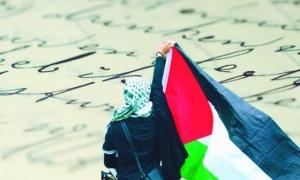
In the darkness of a city reduced to ashes, where the flashes of missiles and the roar of bombs have become commonplace; where the promise of tomorrow is shattered and the future is nothing more than a pipe dream… amidst the fire and destruction, a library has been built, which is tantamount to sheltering hope or launching—amidst the silence of the books—a war cry.
In Gaza, a library has opened. And, although this type of center is always a joy, the place and the way in which the books that the library now houses arrived are symbols of a people who refuse to disappear.
Its name speaks of willpower. Like the phoenix, many of the texts that arrived at Fénix were rescued from the rubble of educational institutions, libraries, and other facilities destroyed by Israeli attacks on the Gaza Strip.
Found, dusted off, and made available to the Palestinians, they might bear "battle scars," but what is a torn page or a damaged cover when there are children who still can't read, because their schools no longer exist or because the historical conflict hasn't even allowed them to learn?
“In Gaza, building a library during a genocide is an act that rises to the level of liberation; perhaps it is liberation itself. Every book I carried on my shoulders while displaced, and every book I rescued from the rubble, was a stolen homeland,” said Omar Hamad, who founded the library with some friends.
Other volumes were part of the personal collections of Hamad, his friend Ibrahim Massri, and other project initiators. Volunteers donated literary works and financial resources to establish Phoenix.
In a 2025 publication, Hamad had written: “I search diligently for the meaning of hope and cannot find it, the meaning of love and cannot find it.” Perhaps he doesn’t know it, but in that project lies what he was searching for, because in the midst of the chaos of war, what are a pile of books?
Has the devastation of more than 13 public libraries, historical archives, and university centers in Gaza been mere collateral damage? Is it a "coincidence" that 53% of the artistic and architectural heritage of the coastal enclave has been destroyed in these two years of escalating warfare?
The answer is well known. These places, like the Islamic University, the Palestinian Center for Politics and Development, and the Central Archive—the latter holding documents over 150 years old—possessed something that can withstand bombs and hatred: knowledge, Palestinian identity, heritage. That is why they are targets of genocide.
However, resilience, the desire to learn, and knowledge cannot be bombed. Drones cannot fly over lived history and erase it.


