

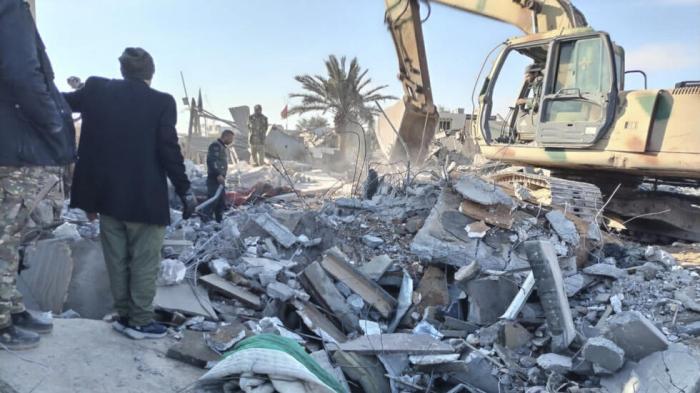
Since the beginning of this century, five presidents have occupied the White House: Bill Clinton, George W. Bush, Barack Obama, Donald Trump (first and current terms), and Joseph Biden. In each of these administrations, with alternating Democrats and Republicans, armed aggression against sovereign nations has been a constant.
If we consider the period from 2000 to the present, Clinton would seem to have the "best record," but given that his administration began in 1993, his record is not without bombings in Somalia (1993), Bosnia (1994, 1995), Sudan (1998), Afghanistan (1998), Iraq and his "Desert Fox" operation (1998), in addition to what remained of Yugoslavia in 1999.
For his part, George Bush also had a long list of military aggressions that are not worth categorizing by date, as most continued throughout his presidency.
Afghanistan and Iraq suffered continuous aggression and occupation, while Pakistan was attacked from 2004 onward. Yemen was bombed in 2002, and Somalia between 2007 and 2008.
Under Obama, the siege of Afghan, Iraqi, and Pakistani territories continued, and Libya was added to the list of targets for bombers and drones starting in 2011, and Syria from 2014 onwards. In both cases, when the much-worked "regime change" occurred, the national flag was transformed.
Likewise, the bombing of Yemen and Somalia began, no longer in isolation but systematically.
During Donald Trump's first term, beginning in 2017, U.S. military "exercises" continued in the aforementioned countries, although the bombing of Pakistan ceased in 2018 and Libya in 2019.
Biden maintained the military landscape, with the notable achievement of withdrawing from Afghanistan in 2022, leaving the Taliban in power.
Donald Trump's return to the White House in 2025 has been marked by an increase in the area of armed conflict with a US presence and leading role, including military aggression against Venezuela and Iran, and bombings on Nigerian soil.
The territories militarily attacked by Israel, following the same logic of power and influence as Washington, and with its political, logistical, and military support—Palestine, Lebanon, Qatar—cannot be left out of the count.
The data presented so far demonstrate that, while each US administration has its own particularities, the foreign policy of gunboats—and aircraft carriers today—is not a personal or partisan quirk, but rather a strategic line of the deep state, heavily influenced by actors for whom no one elects, either inside or outside the United States, from arms and technology companies to oil companies.
None of the aforementioned military aggressions have been isolated incidents. They have always been, and continue to be, preceded by intense media campaigns and economic and political blockades.
In all of them, the script of human rights and the fight against terrorism has been invoked, in ways that are more or less blatant, even the supposed war on drugs. In none of the countries attacked to date are there fewer drugs, less "terrorism," or more rights. We will delve deeper into this in future installments.


