

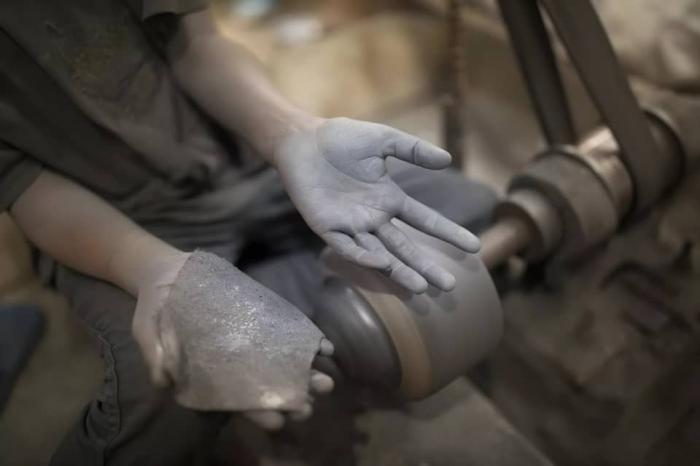
Almost two-thirds of the child population in sub-Saharan Africa, some 87 million children, live by working, although the world promised to eradicate the scourge at this point in the 21st century.
In the opinion of experts, the most complex situation is concentrated in that extensive region of the so-called black continent, but on a global scale progress is equally insufficient.
Evaluations by the International Labor Organization (ILO) and the United Nations Children's Fund (Unicef) indicate that there are nearly 138 million minors subjected to such practices, of which 54 million perform dangerous tasks in various parts of the world, including countries with powerful economies.
The Sustainable Development Goals of the 2030 Agenda—adopted in 2015—embodied the international community's commitment to eradicating child labor by 2025.
Since 2000, the phenomenon has been reduced by almost half; however, progress is slow and uneven, according to the report "Child Labor: Global Estimates in 2024, Trends and the Way Forward," whose warnings were reiterated this year by the ILO and UNICEF.
Furthermore, recent gains are fragile in the face of threats such as climate change, conflict, institutional weakness, economic instability, and other challenges, the report warned.
Under the slogan "Red Card to Child Labor: Fair Play for Children, Decent Work for Adults," a global campaign urging the search for lasting solutions continued into 2026.
The premature entry of children into the workforce often occurs when families face economic hardship or uncertainty, whether due to poverty, the sudden illness of a caregiver, or the loss of employment by the family's main breadwinner, studies confirm.
Often, the decision is linked to dropping out of school. Furthermore, school attendance alone does not guarantee meaningful learning or the elimination of gaps in basic reading and arithmetic skills.
According to United Nations research, agriculture continues to be the sector that employs the most child labor, at 61% of the total, followed by the service sector (27%) and industry (13%), which includes mining and manufacturing.
At the same time, child trafficking, forced labor, the recruitment of children into armed conflict, commercial sexual exploitation, and participation in illicit activities persist.
Migrant and refugee children—many of whom have been displaced by conflict, disasters, or poverty—are also at risk of being forced to work and even becoming victims of trafficking, especially if they migrate alone or take irregular routes with their families, UNICEF noted.
"We know that progress toward eradicating child labor is possible by implementing legal safeguards, expanding social protection, investing in free, quality education, and improving adults’ access to decent work," said UNICEF Executive Director Catherine Russell.
Most regions could partially or completely eliminate this scourge in the coming decades, but sub-Saharan Africa is unlikely to follow a similar path if current trends, which perpetuate underdevelopment and the plundering of natural resources, continue.
Now more than ever, it is urgent to maintain and increase social funding. Reductions in support for education, social protection, and livelihoods could push already vulnerable families to the brink.
The fundamental policy imperatives for ending child labor "are widely known and supported by decades of research and experience," the ILO and UNICEF reiterated.
"Behind the figures and statistics," the statement summarized, "are real children: 138 million lives affected by hardship, backbreaking work, and lost opportunities."
Adopted in February 2026, the Marrakech Global Framework for Action against Child Labour "offers us a roadmap based on decent work for parents, quality universal education, social protection, and the strengthening of laws and institutions," noted ILO Director-General Gilbert F. Houngbo.
The red card symbol serves as a reminder of the urgency and the duty to take a stand for justice and the right to life.
Photo


