

The ocean-based economy continues to expand, bringing great benefits to humanity; however, its current patterns threaten the future prosperity of businesses and the health of the planet.
According to the Food and Agriculture Organization of the United Nations (FAO), global fisheries and aquaculture production is at an all-time high, "but ensuring sustainable and equitable growth remains a significant challenge."
In the report The State of World Fisheries and Aquaculture 2026, the agency confirmed a new record of 235 million metric tons in 2024, of which 195 million metric tons came from aquatic animals, highlighting the importance of both activities in providing high-quality nutrients to a growing global population.
At the same time, the sector provides abundant employment opportunities and significant business returns. However, specific policies and investments are needed to improve the availability, accessibility, and affordability of food in order to ensure its more widespread inclusion in diets, the FAO noted.
Sectors such as aquaculture, tourism, and transportation are driving the growth of the ocean economy. Maritime services alone are valued at 1.44 trillion dollars annually, according to data from the United Nations (UN).
Currently, maritime and coastal tourism accounts for 32% of global ocean trade, a figure equivalent to approximately 785,000 million dollars annually. In the case of goods, trade volume is in the range of 487,000 million.
While business flourishes, marine life and the health of the oceans face increasing pressures stemming from climate change, ecosystem degradation, and pollution from industry and human consumption, against a backdrop of complex socioeconomic and geopolitical crises.
Released in June 2026, the Third World Ocean Assessment (WOA III) provided abundant evidence, drawing on contributions from more than 500 experts from 86 countries, who compiled information over nearly five years.
According to the report, 52 million metric tons of plastic waste enter the ocean each year, resulting in an estimated 24 trillion tiny particles that affect more than 4,000 species. In addition, residues of more than 4,000 pharmaceutical and personal care compounds have been detected in the water.
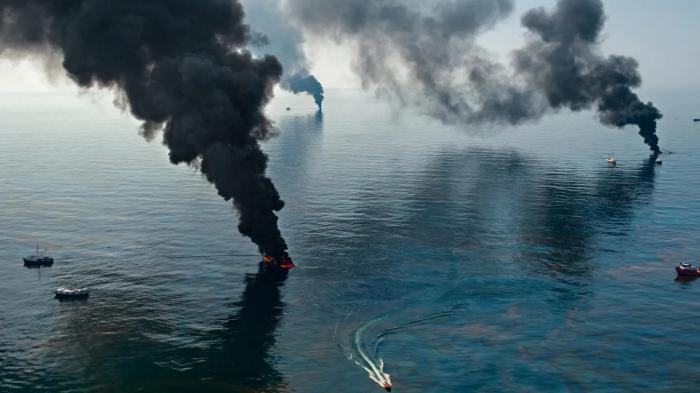
At the same time, environmental risks associated with offshore projects are on the rise, including wind farms, deep-water oil installations, and submarine cables and pipelines that disrupt ecosystems far from the coast.
Furthermore, the concentration of human and economic activity in vulnerable coastal areas is intensifying the extraction of natural resources, the expansion of infrastructure, the discharge of waste, and habitat degradation.
Critical coastal ecosystems, such as mangroves and seagrass beds, continue to shrink, while hypoxic (or "dead") zones—where oxygen levels are so low that most marine life cannot survive—now cover 4.5 million square kilometers, the UN review revealed.
A wide range of benefits are under threat when one considers, for example, that marine food systems are a vital source of nutrition and livelihoods, providing 20% of the animal protein consumed by humans.
The warnings also note that marine aquaculture is now a global industry worth approximately $90 billion annually. Meanwhile, 121 million people engage in recreational marine fishing, contributing to local economies.
"The ocean, its ecosystems, and the services it provides are deteriorating rapidly and at an accelerating pace. This is not an opinion; it is the clear conclusion drawn from extensive scientific evidence," emphasized Spanish expert Rafael González-Quirós, one of the co-directors of WOA III.
Among the main threats, he highlighted rising temperatures and sea levels. Some 16% of the total ocean heat absorbed since 1955 has occurred predominantly after 2018, while sea level rose from 1.3–1.9 millimeters (mm) per year before 2015 to a rate of 4.3 mm per year in 2023.
As in so many other areas, the situation is by no means an irreversible catastrophe: global action can move forward to achieve lasting solutions through multilateral cooperation and science-based decision-making.


