

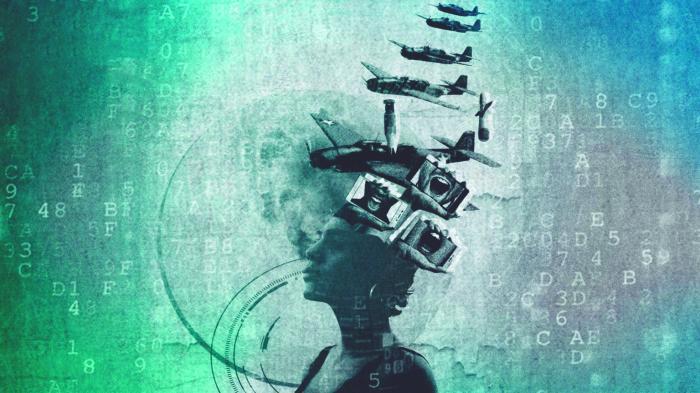
Washington, at full throttle, seeks to synchronize the attempted energy collapse with disinformation and the sowing of doubt, in an unprecedented scenario of multidimensional pressure.
In the literature of strategic intelligence, there is an old concept that, in the digital age, has reached a terrifying level of sophistication: generating confusion to sow doubt in people. Today, this strategy has become the central axis of U.S. foreign policy toward Cuba. It is not just one of the classic tools of ideological confrontation, but a dissonant symphony in which material suffocation and the erosion of perception play in unison.
A detailed map of this new cartography of conflict allows us to appreciate how cognitive warfare is not an epiphenomenon, but the main driver of a strategy designed to fracture the nation's soul. It's not just the usual blatant lies; it's a perverse mechanism of subtle poisoning, seeking to sow suspicion about everything and everyone.
That particle of uncertainty, endlessly repeated in digital ecosystems, erodes trust in institutions and in the narrative of resistance. Information overload, the creation of parallel realities, and the use of bots that replicate messages with slight variations all pursue a single goal: to make citizens stop believing in their own perceptions.
In recent months, the qualitative leap has been the massive use of Generative Artificial Intelligence. Furthermore, Washington has perfected the technique of hyperrealistic deepfakes and audience micro-segmentation. It's no longer about broadcasting a single message for the entire island, but about designing specific narratives for the housewife in Havana, the young tourism worker in Varadero, or the engineer in Holguín.
Tools like advanced language models allow for the generation of thousands of versions of the same hoax, tailored to the vocabulary, pain, and frustration of each demographic group. Artificial intelligence synthesizes voices, clones the faces of leaders in compromising contexts, and, most dangerously, simulates WhatsApp conversations between "ordinary citizens" discussing power outages and shortages with a prefabricated tone of defeat. But the crown jewel of this cognitive strategy is the use of predictive AI to anticipate discontent. Algorithms process sentiment on social media and closed forums, detecting peaks of emotional exhaustion.
It is in these moments of extreme vulnerability, as the energy blockade strikes with prolonged power outages and fuel shortages paralyze transportation, that amplification campaigns are activated. Then, the AI transforms the situation into an unbearable psychological ordeal, multiplying the perception of chaos.
We are witnessing a diabolical equation: while the population is suffocated by the lack of electricity and food, in order to provoke discontent, the digital space is simultaneously flooded with messages that blame the Cuban government exclusively for this scarcity, omitting the external origin of the suffering.
These are the weapons of a narrative designed to incite collective despair. AI does the work; when a neighborhood goes dark, cell phones (if they have battery and data) are flooded with fabricated messages about "incompetent management" and "official privileges," without ever mentioning the declared economic war.
The ultimate goal is not just economic collapse per se, but social unrest. The White House aims to replicate the script used in other regions and unsuccessfully attempted in Cuba in the past, but with far more sophisticated technology. The idea is to synchronize the moment of peak material hardship with an unstoppable digital offensive that overwhelms the state's capacity to respond, creating the image of an ungovernable nation in the eyes of the world.
However, human intelligence has one advantage over artificial intelligence: historical awareness. Faced with this hyper-technological disinformation machine, a cultural counteroffensive is needed to reclaim the value of verified information, data journalism, and, above all, empathy.
A cognitive war is won in the streets, in neighborhood dialogues, in the trust built face-to-face, where AI cannot yet reach. The challenge for Cuba is titanic: to withstand the pressure of a suffocating blockade and, at the same time, defuse the cyber cluster bombs that explode in citizens' pockets.
Therefore, the response cannot be merely institutional; it must be social. It is about building an ethical shield against doubt and understanding that, in this new war, every informed citizen is a soldier of truth. Washington has unleashed all its weapons.
The question that hangs in the air—and that time and history will answer—is whether the tenacity of the Cuban people, forged in more than six decades of resistance, will be able to overcome this perverse alliance between material suffocation and the digital mirage.


