

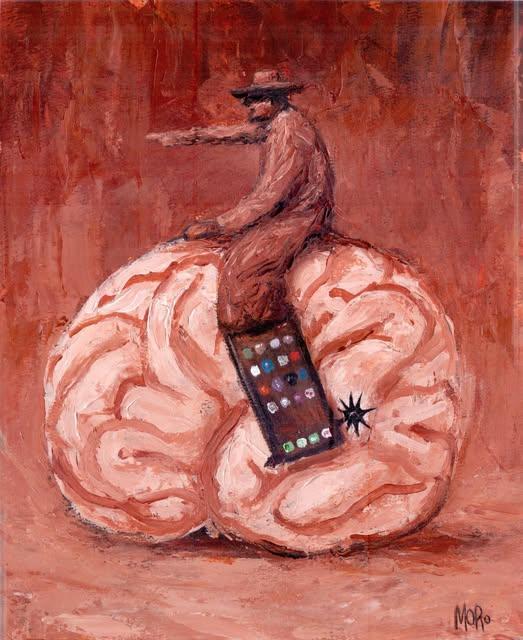
Every time a politician turns a complex proposal into a twenty-second video, a provocation, or a meme, it may seem like they are simply modernizing their campaign. But something deeper is happening. Parties no longer use social media solely to distribute their messages: they modify the messages themselves to conform to the rules that decide what we see. Politics is learning to speak the language of the algorithm.
An algorithm is neither good nor bad in itself, just as a recipe for flan isn't. It's a rational procedure: it receives information, applies rules, and produces a result. The political question is who writes the recipe, what ingredients they select, and what outcome they seek. On TikTok, Instagram, or X, private companies have designed recommendation systems whose business depends, to a large extent, on holding our attention and converting it into revenue.
Political parties, particularly those on the right, know these rules. Lengthy programs give way to soundbites (short phrases designed to circulate); provocation becomes rage-baiting (content designed to incite anger); and leaders compete with celebrities and influencers for seconds of attention. There's no need to imagine a technological conspiracy. A study published in Nature in 2026, conducted with 2,000 participants around the time of the 2024 US elections, found that interaction-based systems amplified emotional, moralizing, and toxic content. The economic incentive ultimately shapes political discourse.
In Latin America, this dynamic is intertwined with personalism and a crisis of representation. Professor Pavel Sidorenko Bautista, a researcher at the University of La Rioja, points out in Perfil magazine the campaign of Abelardo de la Espriella in Colombia, where the politician's aesthetic resembles that of the most superficial digital creator, and explains why the president gives balls to the survivors of the earthquake that devastated his country, instead of addressing the health emergency like a responsible adult.
But accepting that platforms have built this terrain doesn't mean abandoning it. If millions of people are there conversing, getting information, having fun, and also engaging in politics, it would be suicidal for a transformative alternative to cede that space. It must contest it. Zohran Mamdani understood this dimension in his campaign for mayor of New York. He engaged in conversations with digital creators and used formats typical of Instagram and TikTok, including short audiovisual stories aimed at the Latino vote. Adapting to the medium doesn't necessarily mean accepting the seemingly most "popular" political content.
Therein lies the decisive difference between submitting to the algorithm designed by imperial platforms and challenging it. The left can learn how messages circulate without letting anger become its constant fuel; it can use short videos to mobilize attention toward deeper explanations, incorporate its political projects into new digital communities, and transform reach into participation. Abandoning these spaces because they belong to private corporations would be tantamount to surrendering the conversation within them as well.
Frankly, I don't like the expression "dictatorship of the algorithm," because it risks attributing political will to a technical recipe that lacks it. We don't live under the dictatorship of a machine, but rather within an increasingly privatized public sphere, governed by business models that turn attention into a commodity, and to which political actors themselves have adapted. This formulation allows us to point to specific responsibilities while preserving a fundamental idea: these rules are neither natural nor inevitable. They can be regulated, modified, and, above all, challenged.


