

The weekend left two episodes that, in different ways, showed the extent to which daily life depends on technological infrastructures that can seem very safe, even that are almost never noticed until they fail.
One occurred in the airspace of the United States, the other, in the digital tools that millions of people use to work, or it would be more correct to say, for almost everything. Both had massive reach and both forced the authorities and companies to give explanations.
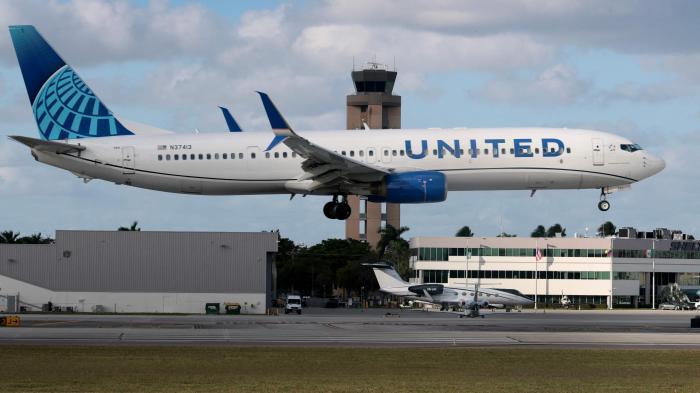
In the United States, a failure in the communication systems of the Federal Aviation Administration (FAA) caused the cancellation and delay of thousands of flights, the alert immediately multiplied. Delays and rescheduling continued over the weekend, and more than 14,000 flights were affected on Saturday alone, according to data circulated about the episode.
In parallel, Microsoft confirmed the full restoration of services such as Teams, Outlook and Copilot after a global interruption that affected users around the world. The company reported that services had returned to operating normally, although the event left companies and work teams without their usual communication channels for hours.
Beyond their temporal coincidence, both failures underline the same dependency, aviation needs stable communication systems to operate safely and punctually, companies need available digital platforms to sustain their daily rhythm.
When those foundations falter, the impact is not measured only in canceled flights or messages that are not sent, it is measured in lost time, in operational costs and in a trust that costs more to rebuild than a server.
The FAA raised the alert and Microsoft restored its services, however, the events also raise a question for many: Technological obsolescence in the main "capitalist power"?
Interruptions in mobile networks were a constant. In August 2026, a massive Verizon outage left residents and emergency networks offline in Southern California. A month earlier, in July, T-Mobile suffered a nationwide outage that led to more than 62,000 customers reporting service issues.
Large cloud service providers also had their share of incidents. Amazon Web Services (AWS) reported a regional outage in July 2026 that affected access to dozens of popular websites and services that depend on its infrastructure.
Not all failures are purely digital, the FAA itself had already experienced a significant one before the November collapse. In September 2026, a failure in communication lines at an air traffic control facility in Philadelphia, compounded by the accidental cutting of a backup fiber optic during construction, caused approximately 9,500 flights to be delayed or canceled.
This background reinforces the idea that the obsolescence and vulnerability of critical systems is not an isolated incident, but rather a structural condition that manifests itself regularly in the United States.


