

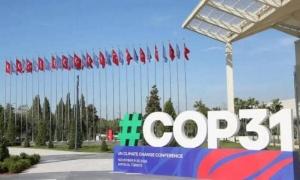
The 31st UN Conference of the Parties on Climate Change (COP31) concluded this Sunday without a global consensus, after a 44-hour extension that made it the longest summit in history. The final text proposed by the Turkish-Australian presidency, baptized as the Antalya Pact, did not achieve the necessary support and exposed a deep fracture between the global North and South.
The main obstacle was the refusal of the European Union, the United Kingdom, Panama and several Pacific island states to endorse a document that eliminated all explicit mention of the energy transition. "We will not support an Antalya Pact that does not even mention fossil fuels, the key driver of climate change," said Ireland's Climate Minister, Darragh O'Brien, on behalf of the EU. More than 130 countries had demanded a clear roadmap out of coal, oil and gas, but the final draft simply reiterated the UAE Consensus from COP28, without imposing new obligations. Civil society described the result as "disappointing", warning that inaction "survival of the fossil sector."
On a financial level, the decline was equally palpable. The second draft of the agreement deleted the reference to the goal of 120 billion dollars annually until 2035 for the adaptation of developing countries, a commitment that came from the COP30 in Belém. Although the final text recovered a mention of article 9.1 of the Paris Agreement - which legally obliges developed countries to contribute resources - it left the specific figure in the hands of a technical report and sent any roadmap to COP32. This delay was denounced by the Cuban Foreign Minister, Bruno Rodríguez Parrilla, who described the attitude of the industrialized nations as "selfish" and warned that it will increase the costs of adaptation for the global South, especially for small island states.
The gap between what was promised and what was delivered became even more apparent regarding the issue of loss and damage. The final draft omitted critical data on the fund’s lack of liquidity: requests from affected countries totaled $2.8 billion, compared to a mere $342 million available, and only half of the $822 million pledged had actually been disbursed. Rather than providing an assessment, the text offered nothing more than a "diplomatic appeal."
The failure of COP31 occurs in a context of scientific urgency. An exceptionally strong El Niño could push an additional 49 million people into acute food insecurity by the end of 2027, according to World Food Program (WFP) projections. The UN estimates that developing countries need $300 billion annually to adapt, while in 2024 they will only receive between $28 and $32 billion in public financing.
Climate justice remains an unfinished agenda. The absence of a binding agreement does not absolve those historically responsible of their debt to vulnerable nations, whose survival depends on predictable resources rather than deferred promises. COP31 has concluded without an agreement, yet it has laid bare a stark truth: promises without resources are merely propaganda—climate justice demands concrete action, not rhetoric.


