

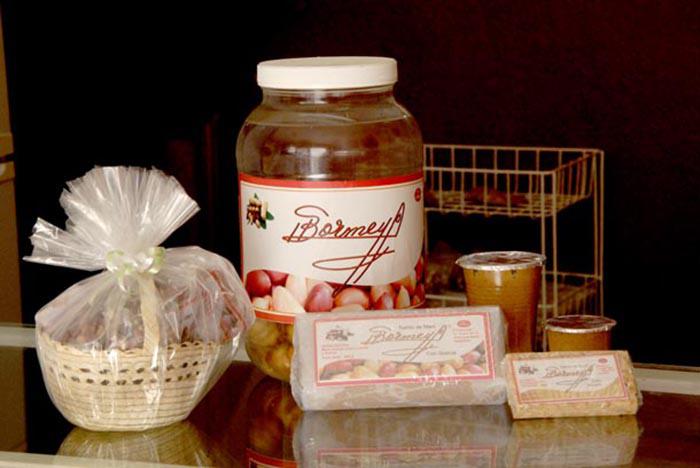
Santa Clara- The peanut vendor of Santa Clara (capital of the central province of Villa Clara) is unlike those one commonly finds in any small Cuban town. He doesn’t sell the typical cones of salted or sugar roasted peanuts, immortalized in a song by Moisés Simons. Instead, at number 331, Maceo Street, this vendor has given new life to a customary symbol of the city, a product which transcends a mere commercial transaction.
“No shell and no mask…just peanuts,” reads the Maní Bormey business card, a brand which in December 2012 offered the city the opportunity to enjoy a different kind of peanut. Today, the initiative, brought to life by young engineer Orelvis Bormey, offers over a dozen products made from this widely consumed nut.
Although turrón (a nougat-like candy) reigns supreme among this banquet of options, roasted and sugar coated peanuts, varied confectionary (small caramel coated stuffed balls, sweet syrup-soaked treats, different varieties of marzipan), peanut milk and butter are also very popular. According to Bormey, each includes a range of products, and in addition to their positive reception among Santa Clara residents, demand for these peanut treats is also spreading across the nation, and to countries such as the United States and Canada. He explains that “many foreigners come and buy them, and there are others who order from abroad.”
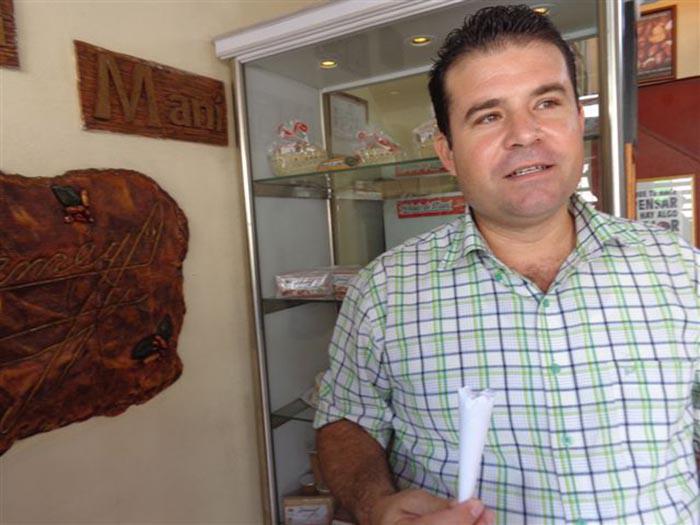
It’s important to be clear that while Maní Bormey operates out of a small shop, with not enough space to sell milk shakes, and lacking the technology to make peanut milk quickly; it is able to produce turróns made with or without sugar, as well as varieties containing up to 20% less fat. According to Bormey, this has been possible given the fact that since May the business has been attempting to extract oil from different types of peanut, discovering that white nuts are best.
In this sense, Bormey adds that a paste is obtained through a process featuring a German pressing machine, which is then turned in to butter for example. Despite the fact that peanut butter isn’t normally eaten in Cuba, Maní Bormey is contributing to promoting the product and has succeeded in ensuring that clients purchase significant amounts.
Another distinguishing feature of the project is the variety of different ways in which roasted peanuts are prepared and packaged, as well as the use of country recipes. Such is the case of the migas de plátano (plantain crumbs), made by grinding up fried plantain and mixing it with a kind of dehydrated peanut. Bormey recommends combining the dry substance obtained with milk or using it in meat sauces. “The taste is magnificent. Funnily enough it’s a recipe made with almonds in the rest of the world,” he notes.
On the other hand, the small business owner has experimented with combining peanuts and sorghum to produce a line of products which he hopes to expand in the future. Meanwhile, Bormey highlights the need to regulate stocks and supplies, as tons of peanuts are required every month in order to make some 500,000 Cuban Pesos (CUP), especially since the most expensive product sold is a cake costing just 65 CUP.
THE FACES BEHIND THE SUCCESS
Many would assume that Maní Bormey is a non-agricultural cooperative, and they wouldn’t be far from the truth. Bormey has over a dozen affiliated workers, all of whom maintain their self-employed status. The business is structured like a cooperative in regards to forms of payment and workers’ link to production. Bormey notes that rights and responsibilities are specified in writing, and that the key to success lies in the high level of demand imposed.
After having worked in areas such as human resources, quality control and administration in the state sector, the young engineer has learned how to lead a heterogeneous collective of industrial engineers, Physics graduates and nurses, all linked by one key characteristic; they are all innovators.
In addition to optimizing their time and maintaining the image of Maní Bormey, this workforce has also had to invent machines, beyond those purchased through bank loans, as well as constantly monitor the quality of the peanuts. That said, it’s worth noting that all are fully aware of the importance of the raw material to this business.
The peanuts arrive throughout the year from several Villa Clara municipalities including Esperanza, Encrucijada and Vueltas. Bormey tells Granma International that come September the business is set to strengthen its links with the José Martí Credit and Services Cooperative (CCS), based in Encrucijada, which will become their sole peanut supplier. He also notes that work with other entities dedicated to oil-bearing plants and the opening of further outlets is also scheduled.
Vital to Maní Bormey’s existence is its certification by the Food Hygiene Institute, as well as its attempts to seek out more allies among important state entities.
To date, the brand functions much like a supplier, offering its products to be presented or enjoyed in important events. The most convenient method has proved to be supplying areas lacking in peanuts or other products such as sesame seeds, or squash, through bulk purchases.
Approaching ProCuba, the Center for the Promotion of Foreign Trade and Investment, has been a fruitful experience, but ties must be strengthened and expanded and more infrastructure created. According to Bormey, no international distributor enters the market before first discussing cargo containers, which a ten person mini-factory simply can’t fill.
Maní Bormey, born in Cuba’s central region, is present in international fairs and has been experiencing great success since 2012, an achievement celebrated among the entire family.


