

Ciego de Ávila.–Cuba places such high priority on the lives and health of human beings that not even the red ink that COVID-19 is causing the country’s finances led to any hesitation in making the decision to suspend one of the economy’s major driving forces - tourism - given the danger posed by the virus that would surely arrive with visitors.
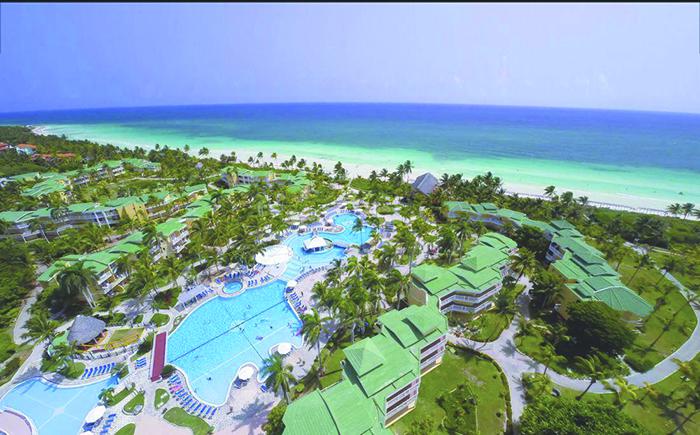
The new, unknown disease obliged Cuba to close all doors. But when we learned to recognize, corral, and treat it - and how to keep it at bay despite its continuing presence by adhering to strict protocols of bio-security and responsible social behavior - we thought of our remote, paradisiacal keys, separated from the big island geographically, as the place to begin a limited re-opening of international tourism, with the health risk to the population kept at a distance, across the waters.
Thus the decision was made, and adhering to rigorous standards, the necessary conditions were created and verified at airports and a few selected hotels, to guarantee that no possible ill tourist would infect another visitor or the
Cuban workers, who, with the same quality, personalized service as ever, would welcome them.
With certification as providers of ‘More hygienic and secure tourism,’ which much more than a piece of paper ensures ongoing adherence to a series of protocols, this past July 1, Cuba opened 12 hotels on these keys, which have now received their first guests, eager to safely enjoy the natural and cultural assets of a country that is distinguished by its security and beauty.
Of course, ours is also a nation blockaded and persecuted economically by
the United States government, which tolerates no activity without attempting to disrupt it. Once the limited re-opening of tourism was announced, the extraterritorial reach of the blockade was put into action to obstruct Cuba’s efforts and the first move made was intended to generate uncertainty among potential clients about their safety here, beginning with our traditional Canadian market.
We already know about the article addressing the case of a visitor from this country published September 8 in the medical journal Neurology, entitled “Neurological damage in patient returned from Cuba,” which CTV News reported this same date.
Cuba’s ambassador in Canada, Josefina Vidal, clarified, “The text refers to symptoms cited by a person more than a year ago, which were investigated in a single study, covered by the JAMA journal, along with a theory similar to others that have been expressed regarding a possible reaction following exposure to pesticides.”
The intention to sow doubt is obvious and merits a quick response, although despite the stubborn attempt to question the security and attractions of our country, there is no better answer than the growing number of visitors who continue to arrive, and leave pleased, as reflected in the many comments posted on TripAdvisor, the world’s leading tourism promotional platform.
An example? A user who identifies himself as @jvelasquez89 posted this comment after a stay at the Pullman Hotel on Cayo Coco, off our central northern coast, “An excellent place to spend grand days of relaxation, good food, and a beautiful environment. My girlfriend and I enjoyed the lodging, the restaurants and entertainment very much.”
Another example? Jordan J, from Buenos Aires, Argentina, writes: “My fiancée and I stayed six days and we loved it; the room was impeccable, the food very good, and activities excellent, as was the service.”
One more? From the Playa Paraíso Hotel, also on a key in Jardines del Rey, Giorgia reports: “We are group of three young women from Italy and Spain who stayed in the hotel three nights. It was simply perfect, spacious rooms and beds, all perfectly clean, bars open 24 hours a day, activities organized on the beach and at the pool, delicious food and lots of choices.”
SECURITY GUARANTEED
No one can question the steps Cuba takes to protect lives, anywhere, including tourist facilities. Has anyone forgotten how many vacationers who arrived with COVID-19 were treated and saved here? Or the visitor who left the hospital grateful, after recovering from serious condition to return to his country in good health; or Cuba’s colossal effort to come to the aid of a British cruise ship with sick passengers and crew members aboard, rejected by so many other ports where help was requested?
Of course the limited opening now beginning will provide the nation some much-needed economic oxygen, but the decision was based on our ability to offer full protection for the lives and health of visitors, as the first experiences in Jardines del Rey have demonstrated.
The most recent example involves the 104 tourists who arrived in the resort area this past September 4, coming from the Canadian city of Montreal, who immediately upon arrival were administered a PCR test (Polymerase Chain Reaction). All were negative and able to enjoy the destination’s attractions.
Dr. Osvaldo Iváñez González, provincial director of Health in Ciego de Ávila, detailed the procedures followed when visitors reach the airport terminal, “After exiting the aircraft and entering the immigration area, conditions have been created for passengers to disinfect their hands, feet and carry-on baggage.
“They then move to two areas set up to administer the PCR, where samples are taken by trained medical personnel who appropriately pack them and transport them to the lab in in Villa Clara, where they are analyzed. In less than 48 hours the results are back, just as occurred with the first flight from Montreal, Canada.”
Dr. Iváñez added that, throughout their hotel stays, visitors have their temperature taken and are regularly checked by medical teams onsite, which include nurses and epidemiologists.
In the event that someone exhibits suspicious symptoms, they are isolated on the key, and another PCR is administered. If the result is positive for the virus, they are transferred to a hospital in Villa Clara.
This protocol is part of the program established for certification as a ‘More Hygienic and Secure Tourism’ site, and included in its Guidebook, which also contains procedures for staff training and regulations governing activities, given the demands of the current situation.
Among these measures is the regular checking of body temperature of staff and guests. The thorough cleaning of public areas, including all surfaces, halls, lobbies, and restaurants, among other sites, is among precautions being taken since mid-July when the first facilities in Jardines del Rey were certified: the Pullman Cayo Coco and Playa Paraíso hotels, and the airport.
Dr. Iváñez reports that a medical team has been assigned to each hotel, including epidemiologists who monitor vacationers, and in the event that any problems should arise, among guests or workers, the established plan includes procedures for the administration of tests, transportation, and timely hospitalization, if necessary.
The varied options that Jardines del Rey offers international visitors were confirmed in early August by the first guests arriving from Nassau, in the Bahamas, who were received in accordance with the security and protection protocols established for this period.
Next, the 104 Canadian vacationers put the system to the test, and witnessed the required protocols implemented within a matter of minutes at the air terminal, before traveling to the resort hotels Pullman Cayo Coco, Playa Paraíso, Memories Caribe and Memories Flamenco, on Cayo Coco; and the Grand Muthu, on Cayo Guillermo, to enjoy all the options available on these pristine islets, like boat rides and excursions, including the Boat Adventure to Cayo Guillermo; diving and snorkeling; and bird-watching.
Those interested in the destinations of Jardines del Rey and Cayo Santa María, off the northern coastlines of Ciego de Ávila and Villa Clara, respectively, can enjoy several four and five-star hotels which have a total of some 19,000 rooms available for visitors.
PROTECTIVE MEASURES FOR WORKERS
-No staff member exhibiting respiratory symptoms is allowed onsite. If such symptoms appear during the workday, the person is immediately transferred to a healthcare center.
-Body temperature is regularly checked.
-The use of facemasks is mandatory
-Physical distancing is to be maintained during all tasks.
-In areas where it is not possible to use protective wear, physical barriers will separate workers and guests, or such processes will be re-designed, digitalizing them if possible.
-Staff members will be housed in the resort area, and before their rest period must spend seven days in quarantine, and test negative for the virus upon concluding this period of vigilance.


