

Initial reports following the conclusion of a pilotproject in a Havana municipality, based on the sterile insect technique,highlight the effectiveness of this procedure, reducing the population of Aedesaegypti mosquitoes by 90% last year and achieving almost total elimination of diseases spread by the insect in the area, during the last two months of the study.
According to information published on the International Atomic Energy Agency (IAEA) website, the experimental study was conducted between April and August of 2020, in the El Cano neighborhoodselected as the intervention site, marking the beginning of a more effective and environmentally friendly mosquito control program in the island.
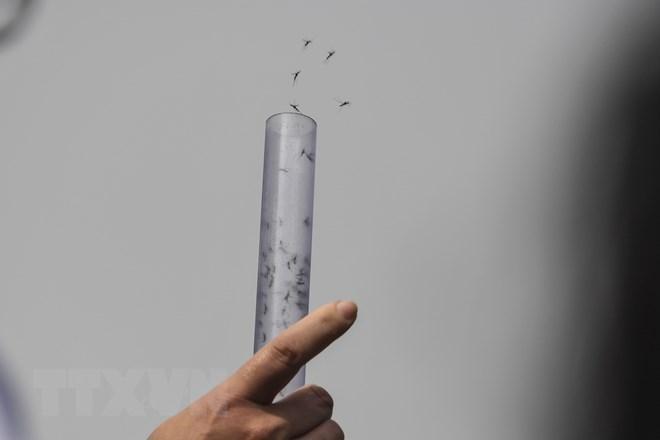
During the pilot, some 1.3 million sterile male mosquitoes were released over 21 weeks, and the objective in the near future is to continue using the procedure in a larger area, reported Rui Cardoso Pereira, head of the Insect Control department at the center established jointly by the United Nations Food and Agriculture Organization and the IAEA.
The sterile insect technique consists of releasing sterile male mosquitoes, which, by copulating with wild females, reduce their reproductive capacity and, thus, the birth rate within the insect population. This technology has been successfully used for more than 50 years throughout the world to eradicate various insect pests of agricultural interest.
In the case of Cuba, the first batch of mosquitoes used in the research were produced at the Pedro Kourí Tropical Medicine Institute (IPK) from eggs collected in the area to be treated.
These were then reproduced on a larger scale in a small bioplant by the IAEA, and later irradiated at the Center for Technological Applications and Nuclear Development (Ceaden), affiliated with the Nuclear Energy and Advanced Technologies Agency (Aenta), attached to the Ministry of Science, Technology and Environment.
Once irradiated with gamma rays or X-rays, the sterilized mosquitoes are unable to produce offspring, while maintaining theirability to be sexually competitive.
According to the source, the pilot study is part of a cooperation project with the IAEA, to demonstrate the feasibility of the sterile insect technique for vector and pest control in Cuba, with the cooperation of the FAO.


