

No one should think that we are trying to export our electoral model. But what we can be sure of is that, with successes and possible mistakes, our own is the one that has determined that our visit to the polls is not a sham, of the kind that costs money and promises, usually unfulfilled, by politicians.
This happens in the north, where the State Department and some republican governor engages in hateful speech to criticize our system.
It is worthless what a US politician like Senator Marco Rubio, who together with some counterrevolutionaries based in Miami, hurriedly qualified as “rigged elections” those of Sunday March 26th in Cuba.
The same as the Undersecretary for Latin America from the US State Department, Brian Nichols, who dared to say that “Cubans were again denied true elections for their National Assembly.”
As a response – although it is not worthwhile- the opinions of 6 167 605 voters who attended the polls should be heard.
How many people vote in the United States? 67% of the electorate? How many votes are needed to elect a President? How is it possible that there is even a case of a President who came to power with little more than 25% of the popular vote?
How many times does a president of that country and his government team travel through states and communities to meet directly with the people's concerns?
These haters, and others like them, should realize that what is happening in Cuba is a true revolution in the way it is governed.
Every nominee to hold a seat in parliament has had a myriad of meetings with the people, regardless if it has been in schools, factories, agricultural farms, scientific centers, neighborhoods being renewed, among other spaces. And they were not there going after votes or making promises. They went to talk with the people to jointly reformulate concepts, correct plans, update projects. They went to the basis of what is the country’s mainstay.
And more than a few times, the President, the Prime Minister and other senior leaders of the party and government talked about systematizing these meetings, without involving a determined electoral process. It is the way of governing every day and with the people, they have stressed.
It is to give continuity to Fidel's system of leadership, always present, speaking, listening, convincing by his example, overcoming dangers and adversities.
It is logical, then, that many abroad do not understand our electoral system, and that some people here showed indignation and frustration upon learning the results.
In the United States, for example, there is a made-up bipartisanship, pure scenography of an exhausted model, in which Republicans and Democrats, in addition to spending millions of dollars in their campaigns, know that they alone have the power to hold the reins of the country.
No wonder, The Economist, in December 2015, described the U.S. presidential election as "the greatest show on earth."
Unsurprisingly the last presidential election saw Donald Trump (Republican) and Joe Biden (Democrat?) fought an election that cost a record $11 billion, the most expensive in the country's history. And yet - despite the billions of dollars - when Trump saw himself defeated, he incited the attack on the Capitol as a "democratic" formula to try to stay in power.
Also, significant is the fact that Biden, narrowly winner, failed to derogate none of the measures added to the blockade against Cuba, despite it was part of his electoral pledges.
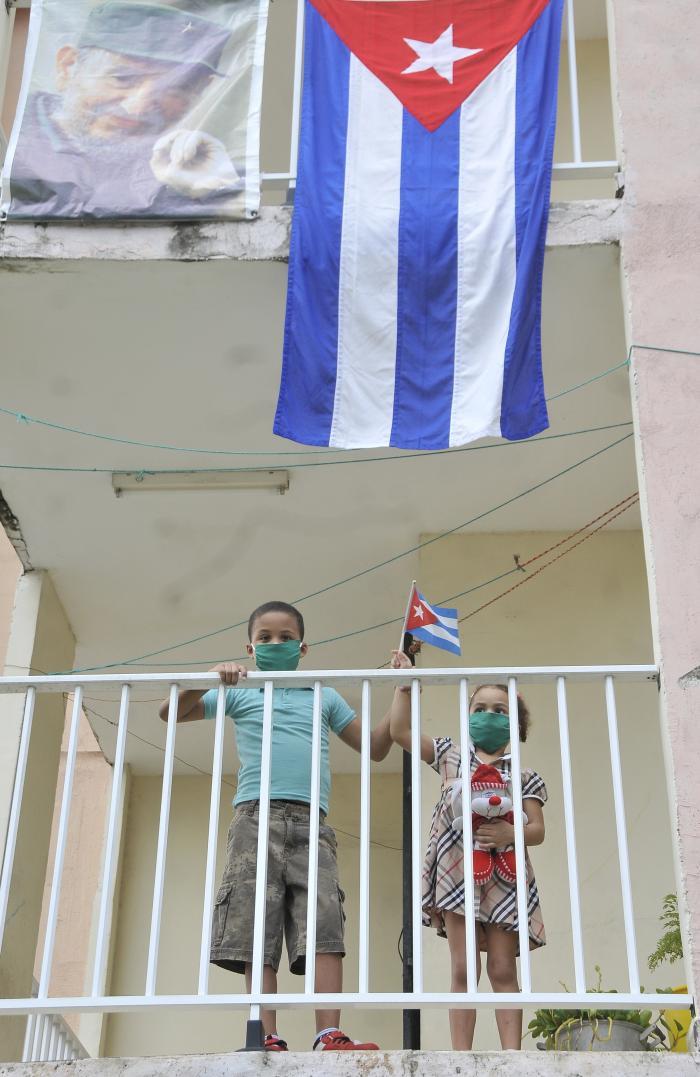
In addition to the ignorance eating away at them, the US officials who question the Cuban election process do not accept that the great majority have attended the polls and that every nominee to hold a seat in parliament were elected by direct and secret vote, in an event without gunshots or soldiers keeping the ballots, and instead an environment of peace and urban harmony, with thousands of schoolchildren standing on both sides of the ballot box, who saluted “voted”.
And at closure time the neighbors went to witness the vote counting, the sum of those marked by united vote, the selective one, or the ones who cast the blank ballot or wrote some repugnant insult, mainly in bad language.
Those who voted in Cuba (75.87%) widely surpassed the figures known in the United States and other European countries, where attendance to the polls fail to reach 60%.
Our model is not to be exported, but to be defended.
Translated by ESTI


