

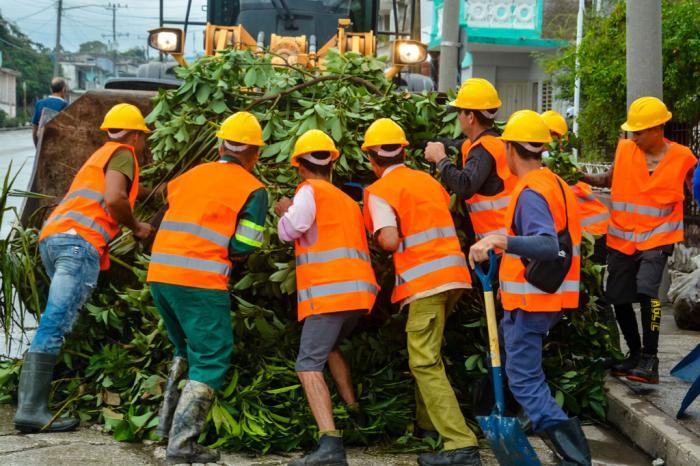
The president of the National Defense Council (CDN), Miguel Díaz-Canel Bermúdez, recognized the wisdom, discipline, and responsibility of the Cuban people during the recovery after Hurricane Melissa passed through the eastern provinces. He made this statement while evaluating the progress of this phase in the program Desde la Presidencia, broadcast on the Mesa Redonda program.
The president stressed that, despite the loss of material goods, crops—including those intended for municipal self-sufficiency—and service infrastructure, the positive outcome is that no human lives were lost. He considered the work carried out by the evacuation systems to be commendable, although he pointed out that coordination was not consistent in all localities. He also reaffirmed that the Defense Councils, at all levels, "acted with responsibility, unity, heroism, and solidarity."
Díaz-Canel specified that around 70,000 homes were affected and tens of thousands of hectares were damaged. He emphasized, however, that the damage is significantly greater due to the prolonged economic, commercial, and financial blockade imposed by the United States.
Preliminary figures indicate that more than 1,003,120 people were protected, of whom nearly 933,000 were taken in by family, neighbors, and friends. In addition, more than 54,000 people remain in evacuation centers due to the effects of the floods.
"The recovery will take time," he acknowledged, but clarified that intensive work has been underway since day one: power and communications lines have already been restored in some areas, and water trucks are distributing drinking water to areas that are difficult to access.
IN CUBA, WE ARE ALL THE STATE
Faced with the hateful rhetoric that attempts to discredit the efforts of the Revolution and attribute the effects of the blockade to state incompetence, the President asked: "Can a failed state face a hurricane like Melissa and overcome the challenge of protecting the lives of its people in such critical moments?
"A week later," he added, "the wounds that Melissa left in her wake in Cuba continue to challenge us. The days pass slowly for those who are waiting for electricity, water, food, and essential materials, but we reiterate to everyone, we assure you, that no one will be left to fend for themselves."
After touring the hardest-hit areas, the president described the experience as "doubly impressive, because of the destruction, of course, but also because of the noble strength of this invincible people." Beyond this characteristic, he added something even more powerful: "the unity of the nation in the face of danger and the humanistic work of the Revolution."
Addressing his critics, whom he called "spokespeople for hatred," he referred to the concept of a "failed state" and stated emphatically: "What the haters do not know is that when that phrase is used in an attempt to discredit the Revolution, they forget that in Cuba, we are all the state."
To support this assertion, he described the state structure as a network that extends from the National Defense Council to neighborhood leaders, and gave as an example "those two comrades who swam across the swollen river in Los Reinaldos to explain the situation in their community to us, not asking for help, but proposing practical solutions."
"The social fabric that the Revolution has created in our neighborhoods, in our communities, both urban and rural, is more powerful than a common State. The power of the people, that is real power," said the Head of State.
Finally, he evoked the legacy of Commander-in-Chief Fidel Castro Ruz, recalling his words during the special period, and concluded with a thank you "to all those who have understood and taken on that challenging legacy, with the conviction that with that momentum we will live and we will win."
WATER SUPPLY SITUATION IN THE EASTERN PROVINCES
Antonio Rodríguez Rodríguez, president of the National Institute of Water Resources (INRH), reported that the reservoirs in the eastern provinces remained stable during the hurricane, and some even recorded record spillages.
With regard to supply, work is underway to restore it as quickly as possible, especially in the most affected communities.
In Las Tunas, the distribution networks have already been fully restored.
In Santiago de Cuba, the two main sources supplying the provincial capital have been restored. The Aguas Turquino company has restored supply to 22% of its population, while Aguas Santiago has reached 33%.
In addition, eight 3,000-liter tanks and 30 more 1,000-liter tanks are expected to arrive, as well as ten generators for buildings without service.
In Guantánamo, 87% of the population already has drinking water, and in Holguín, the percentage rises to 68%. Rodríguez Rodríguez highlighted the progress made in the construction of a pipeline in Moa and the efforts to resolve the supply to the Lidio Ramón Pérez Thermoelectric Power Plant in Felton.
A purification plant arrived in Granma for Río Cauto, while three others are on their way to Cauto Cristo. These, together with the strategic use of reservoirs, will guarantee quality drinking water.
RESTORATION OF ELECTRICITY SERVICE
The Minister of Energy and Mines, Vicente de la O Levy, gave a detailed report on the recovery of the National Electric System, highlighting the progress made and the strategies for the most critical areas.
He assured that all transmission lines have been restored, except for the one from Cueto to Bayamo, and that work is now focused on distribution levels. He specified that Guantánamo is not yet connected to the SEN, but "the priority is to achieve the connection tomorrow."
In Las Tunas, service has been restored to 97.8%, and in Holguín, recovery levels have reached 61%.
De la O Levy noted that Granma, one of the most affected territories, has managed to restore 64% of its service, and acknowledged the work done there and in Guantánamo with distributed generation sources.
Immediate actions include connecting Bayamo to the 110-kilovolt line to consolidate the stability of the system in the region.
He described Santiago de Cuba as the province with the most difficult situation, due to the extensive damage to the distribution networks and in several localities. Although the municipality of Guamá remains inaccessible by road, a generator was brought in and is now up and running.
He explained that, as work is completed in other provinces, the equipment will be moved to Santiago de Cuba, where a comprehensive recovery plan is being implemented to achieve a high percentage of restoration next week.
He emphasized that, in all provinces, emergency generators remain operational, with fuel coverage guaranteed. The minister thanked the workers in the electricity sector, the linemen, and the support of institutions and citizens for their dedication.
MORE THAN 76,000 HOMES AFFECTED
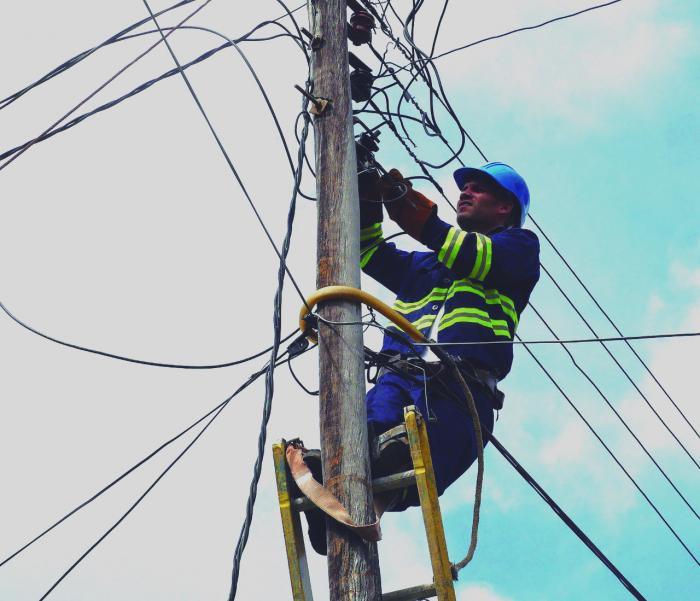
The Minister of Economy and Planning, Joaquín Alonso Vázquez, reported that "we have not had to mourn a single death or injury due to the hurricane," as a result of the implementation of the CDN's decisions and the evacuations carried out.
The preliminary figures on damage to homes, subject to update, are:
Homes with reported damage: 76,689
Total collapse: 4,743
Partial damage to walls and structures: 10,311
Total damage to roofs: 12,056
Partial damage to roofs: 47,753 (of these, 2,190 have already been repaired)
Alonso Vázquez stressed that these figures are dynamic, as assessment teams have yet to access isolated areas. He assured that, despite the blockade, "no effort or resources are being spared," as evidenced by the immediate mobilization of materials.
The recovery effort has multiple sources of support: technical brigades from state agencies, international aid and aid from the Cuban population, and notable community participation.
The Ministry activated specialized working groups:
Legal: Will apply measures against indiscipline and crimes.
Health: Reinforced health controls to prevent epidemics.
Food: Ensures equitable distribution of donations and state products.
Industry: Supports the recovery of household goods and homes.
Insurance and Subsidies: Damage is already being assessed and a subsidy policy for construction materials has been approved.
The Minister warned of the need to take extreme fire prevention measures due to the high volume of flammable material that has accumulated. He emphasized that "once again, it has been demonstrated that an organized and united people, with the leadership of the Party, is invincible."
MEDICAL CARE AND EPIDEMIOLOGICAL MEASURES
The National Health System remains fully activated in the eastern provinces, said Tania Margarita Cruz Hernández, first deputy minister of Public Health.
So far, 642 health institutions have reported damage, with the highest incidence in Santiago de Cuba (231), Granma (144), Holguín (127), and Guantánamo (124). The damage is partial (roofs, carpentry), but 4% of these institutions have already managed to restore their services.
To ensure medical coverage, 33 medical-surgical brigades remain deployed, providing assistance, especially in areas that are difficult to access. Special care is being provided to infants, children under one year of age, and older adults in evacuation centers.
ACTIONS TO PREVENT EPIDEMIC OUTBREAKS
In view of the risk of disease, an intensive epidemiological control operation was deployed. Vector control and hygiene teams are working to control water quality and food preparation, preventing acute diarrheal diseases and other infections.
A survey of nonspecific febrile syndromes is being conducted, and sodium hypochlorite is being distributed to cover several days. Psychological care is also being provided by psychologists and psychiatrists in evacuation centers and affected communities.
Electromedical brigades are being assembled to repair damaged equipment, prioritizing programs such as maternal and child health, hemodialysis, and intensive care. "All our emergency services and hospitals are up and running," he said.
Finally, it was reported that the Universities of Medical Sciences will resume classes on Monday, November 10. The President noted that textbooks were lost in areas affected by flooding, so it is necessary to review and ensure that everything that needs to be replaced is replaced.
THE SCHOOL YEAR HAS RESUMED
The Minister of Education, Naima Ariatne Trujillo Barreto, confirmed the resumption of the school year, which is proceeding "with the same urgency and gradualness as planned." Of the preliminary report of 2,117 affected institutions, more than 50% have already recovered "thanks to everyone's efforts."
She specified that in Santiago de Cuba, a gradual restart will be evaluated starting on Monday due to the complex situation, while in Granma, 219 institutions in four municipalities have already restarted, mainly daycare centers and elementary schools.
He highlighted the selfless work of educators—23 of whom taught classes in their own homes—and called for calm regarding the school calendar, as "the school year still has at least three weeks of reserve for all levels." He stressed that the hygienic certification of schools is a priority in the current epidemiological situation.
As an example of human sensitivity, he cited the case of a child who donated his best toys: "It was very moving to see his selfless gesture." These first days of school will also be dedicated to sharing these everyday heroic acts in which "the children themselves have responded in an extraordinary way."
MORE THAN HELP, MUTUAL SOLIDARITY
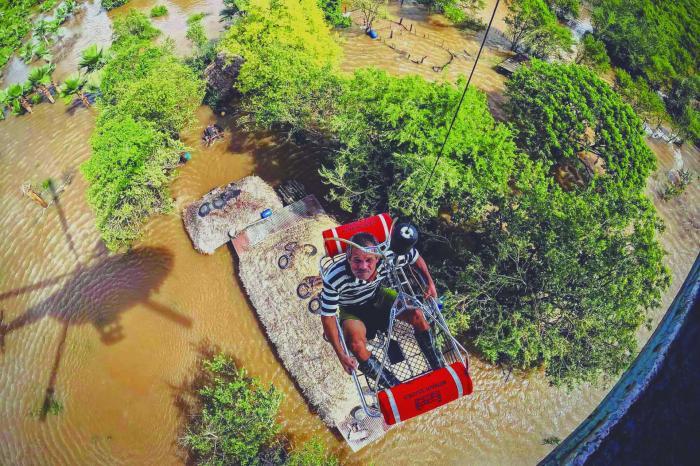
The Deputy Prime Minister and Minister of Foreign Trade and Foreign Investment, Oscar Pérez-Oliva Fraga, recalled that, days before the hurricane, the United Nations System mobilized pre-positioned resources.
Eleven million of the 74.2 million envisaged in a UN action plan have already been received, thanks to contributions from Germany, Norway, and Canada. Likewise, concrete aid is arriving from dozens of countries, highlighting the immediate reaction of Venezuela.
Cubans living abroad, solidarity organizations, foreign companies, and investors are participating in this effort. Yesterday, two ships and two charter flights arrived: one from Colombia with 240 tons of water, food, and medicine, and another from India with 20 tons, including a mobile hospital for 300 people.
"There has been speculation that the aid is not arriving directly, but everything is being received by the population without bureaucracy or intermediation. We prevent donations from going to warehouses and direct them to zonal, municipal, and provincial defense councils," he said.
Oliva Fraga highlighted how the aid projected to the island constitutes a reciprocal response to the historical solidarity practiced by it.
SANTIAGO DE CUBA AFTER MELISSA
Beatriz Johnson Urrutia, president of the Provincial Defense Council of Santiago de Cuba, reported that the main damage includes collapsed homes, fallen trees, electrical and telephone poles, as well as affected streets and highways, which have cut off municipalities such as San Luis and Palma Soriano.
In agriculture, the damage includes the loss of various crops, irrigation machines, and production centers, although work is underway to recover as many hectares as possible. More than 2,000 state facilities were damaged.
So far, electricity service has been restored to 28,140 customers. Construction materials are currently being distributed to those affected by landslides. The leadership emphasized the hard work to repair the damage as quickly as possible.
GRANMA RECOVERS PART OF ITS SERVICES
The president of the Provincial Defense Council in Granma, Yudelkis Ortiz Barceló, noted that just over 5,000 people are still being sheltered in state centers. More than 186,000 people were sheltered in centers and with relatives, and some 2,000 Granma residents were taken in by Las Tunas.
On behalf of the Defense Council and the people of Granma, she thanked the people of Las Tunas for their hospitality. Work is also focused on the municipality of Río Cauto, the epicenter of the most intense efforts.
He highlighted the restoration of electricity service, which has reached 64% (although 50 primary circuits remain without service), and thanked the line crews from Villa Clara and Matanzas for their work. Mobile phone service has been restored, as well as 79% of landline service.
Firm action was taken against five crimes committed, and the arrival of donations and recovery efforts, ranging from cleanup to the resumption of the school year in 219 institutions in various municipalities, were praised.
HOLGUÍN CONTINUES TO RECOVER
The president of the Provincial Defense Council of Holguín, Joel Queipo Ruiz, reported on the complex situation in the territory and the progress made in the recovery.
Around 299,000 people were protected, with 29,244 housed in evacuation centers. Currently, 1,068 people remain in 18 centers and 12,819 continue to be housed in other homes.
The hydraulic system received 217 million cubic meters of water, reaching 94.5% capacity in the reservoirs. "Sixteen dams and 12 diversions are discharging, a historic figure," he said. In terms of basic services, 68% of the residential water supply has been restored and 33 of 51 water truck loading stations have been recovered.
The electricity sector is showing progress with 127 circuits reconnected and daily progress of 10-20% on the 80 remaining. In Moa, 85% of the population already has service. Telecommunications have improved with the recovery of 49 telephone poles and 30,982 customers with service restored.
In education, "91 educational centers are now ready to provide service," describing it as "one of the symbols and signs of recovery." The health sector has 1,250 institutions operational, with 31 of the 141 affected having been restored.
There are reports of 14,630 homes affected, with 784 completely destroyed. Agriculture lost 35,987 hectares, but work is underway to recover seeds for the cold season. In commerce, 10 of 60 bakeries and 41 of 230 grocery stores are operating.


