Humanity owes some ideas to the genius of Albert Einstein, the German scientist known worldwide for developing the Theory of Relativity. These ideas could very well be applied to the current context in our country, marked by a reinforced economic blockade imposed by the northern empire.
He said that crisis was necessary for humanity to advance, and that great ideas only emerge in times of crisis. "Let's not pretend that things will change if we always do the same thing. Crisis is the best blessing that can happen to people and countries, because crisis brings progress. Creativity is born from anguish as the day is born from the dark night," the renowned scientist expressed, and I believe he was right..
For many years we have passively watched as human and material resources have been squandered in most sectors, as if this were a rich country or operating in a normal context, and not besieged by a policy of suffocation that has prevented our normal development.
But as our grandparents used to say, it's never too late to start. Solutions and initiatives have begun to emerge everywhere, demonstrating the nation's potential to resist the imperial onslaught, and even to thrive amidst the storm. Such is the case of the food industry, forced to reinvent itself time and again to guarantee the supplies the people need.
For example, the Villa Clara Dairy Company, which consumed 2,200 liters of diesel daily in milk collection until December of last year, resolved this waste with a simple measure: the direct delivery of the liquid to the warehouses of all municipalities, except Santa Clara, which has allowed the work to be done with only 259 liters of fuel.
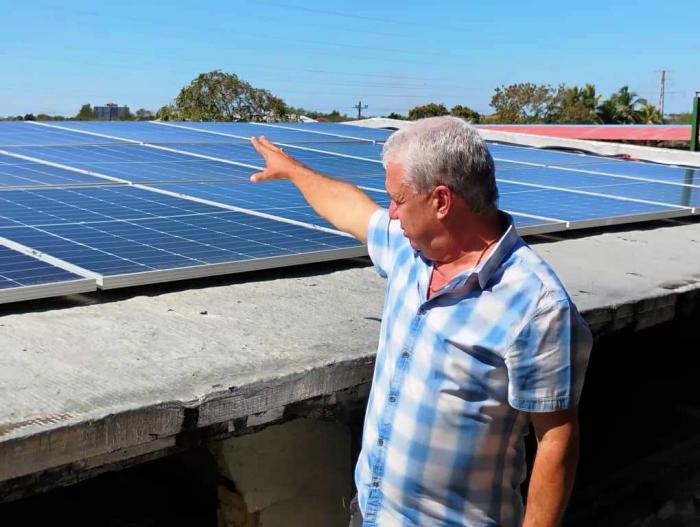
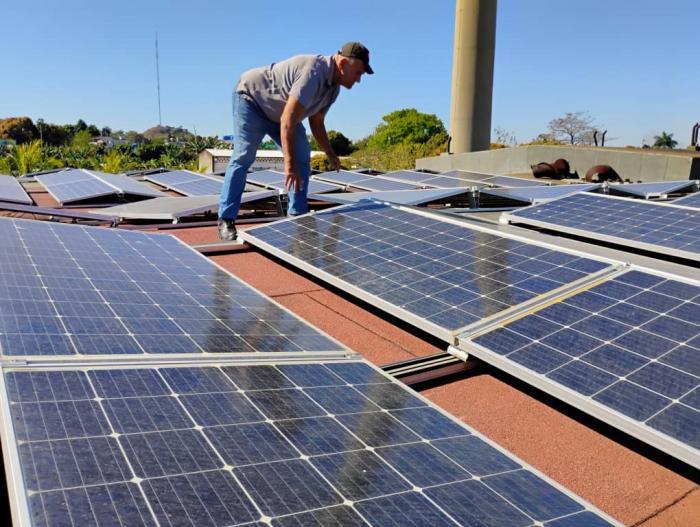
But that's not all. According to engineer Gilberto León Gonzalez, director of transportation and energy at the aforementioned entity, all the pasteurization of milk processed at the Santa Clara dairy plant is now done using photovoltaic solar energy, thanks to the installation of 400 solar panels on the roofs of its facilities.
Thanks to this initial investment, in 2025 they managed to save the country 47 tons of diesel, in addition to preventing the emission of approximately 131 tons of carbon dioxide into the atmosphere, a substance that, as is well known, has a harmful effect on life on the planet.
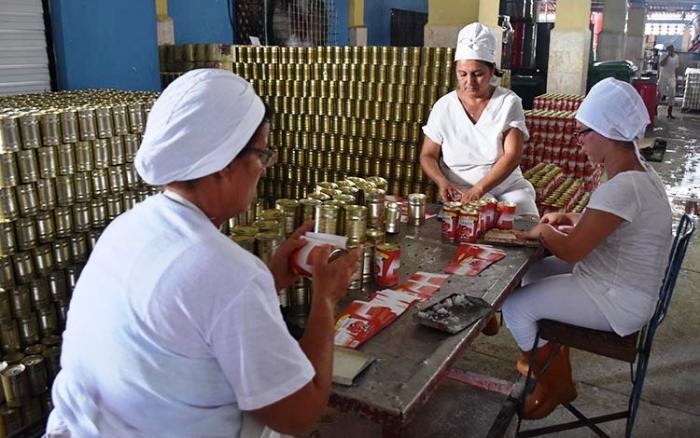
"The goal is to continue expanding and complete the installation of 1,364 panels this year, which would guarantee 10% of the energy consumed at the complex to support its various production processes," says the specialist, who also mentions the fact that workers' meals are cooked using only firewood or charcoal.
And because the dairy industry in Villa Clara thinks big, they are already working on acquiring 18 electric tricycles to handle the transportation of all the milk within Santa Clara, leaving trucks only to transport the milk remaining in the municipalities after distribution to the warehouses. This will also represent extraordinary savings.
Another project in mind is the installation of solar panels on the 308 milk storage tanks in the province. This project, undertaken in conjunction with the local agricultural delegation, will bring numerous benefits, notes Gilberto León.
Similarly, the innovative idea of using surplus steam from the province's largest dairy complex to produce ice cream at the dedicated factory and at the Coopelia ice cream parlor in Santa Clara is already being implemented. This initiative complements the investment made at the Sagua la Grande dairy plant, which switched from diesel to fuel oil for milk pasteurization.
THE SUN CAN'T BE BLOCKED
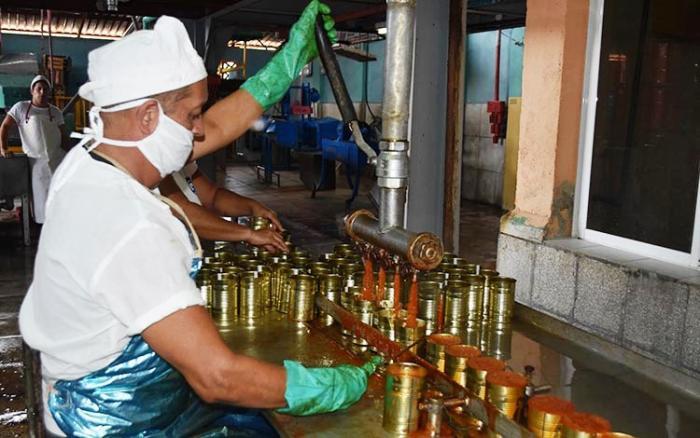
Teresa Alfaro's family was saddened when they heard a neighbor say that the "La Purísima" factory, belonging to the "Los Atrevidos" subsidiary company in Santa Clara, would stop producing the mayonnaise and dressing that were so essential for feeding her two children.
"Honey, they told me at the store that because of the energy crisis, La Purísima is going to shut down its machines. What are we going to do now, with how expensive everything is these days?" she told her husband, Arturo. But what the distraught woman hadn't counted on was the ingenuity of Cubans, who, even in the worst of circumstances, as the saying goes, "don't let it stop."
To resolve this situation, 60% of the photovoltaic solar panels involved in the investment have already been installed there, thus guaranteeing the production of their traditional products, which are in high demand among the population due to their good price and excellent quality.
According to Gustavo Benítez Fumero, the company's director and coordinator for the Food and Fishing Industry sector in the region, thanks to solar energy, they will be able to process almost all of their products at a rate of between five and ten tons per day, depending on the availability of raw materials. "This is the first major investment in the sector's energy transition, and others will follow at the 'Los Atrevidos' factory in Remedios and at the other facilities belonging to the Ministry of the Food Industry in the province," the director acknowledged. He added that the 'Reinado' factory in San Diego del Valle is powered by the photovoltaic solar park installed in the town of Las Casimbas.
Another entity that has joined the initiative is the UEB Matadero «Chichi Padrón», in Santa Clara, a high electricity consumer center, which is already working on the installation of 272 solar panels, which will contribute about 300 kilowatts, thus promoting electricity savings.
Otoniel González Ruiz, director of the facility, assures that the investment should be fully completed by mid-March, at which point they will be able to carry out all their operations using this energy source. He mentioned that these operations include the slaughter of cattle, the production of ground meat, hamburgers, and the rest of the products destined for social consumption and other uses.
Additionally, the transportation of workers, who until very recently traveled by bus, has been replaced with electric tricycles—another well-conceived measure that contributes to fuel savings, explains the director of the "Chichi Padrón" slaughterhouse.
A separate note is the experience of the "Agustín Rodríguez Mena" Central Rum Distillery in Santo Domingo, which since 2016 has been taking advantage of the factory's roof to install a total of 2,752 panels capable of generating the energy they need and even contributing to the National Electric System.
Nothing, as Einstein said, "whoever overcomes the crisis overcomes themselves without being 'overcome'." That's what the managers and workers of the Villa Clara food industry are doing, facing current challenges and demonstrating that there are no impossible goals to achieve.