

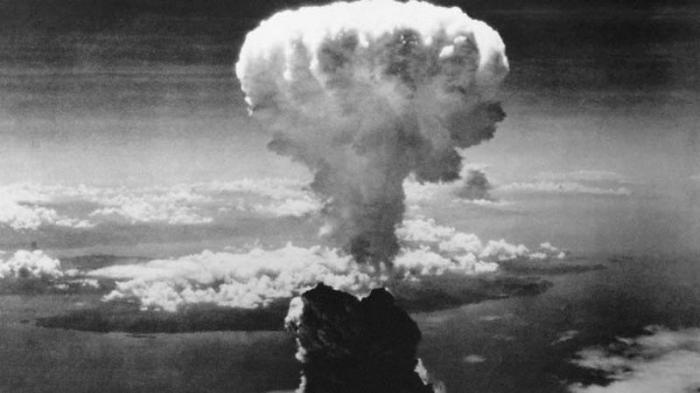
From the dropping of the atomic bombs on Hiroshima and Nagasaki to the wars of the 21st century, the United States has amassed a military record unparalleled in modern history. The figures are staggering: it has bombed more than 30 countries since World War II and has carried out military interventions—including landings, bombings, troop deployments, and covert takeovers—in between 70 and 84 nations. A recent study, which went viral on academic networks, puts the figure at 84 invaded countries.
The U.S. military past and present is a documented fact spanning two and a half centuries of history. According to the book *America Invades*, by Christopher Kelly and Stuart Laycock, of the 194 countries recognized by the United Nations, the United States has invaded 84 and had military involvement in 191. The only three exceptions are Andorra, Bhutan, and Liechtenstein.
This isn't just about declared wars. The number increases if covert operations, targeted bombings, support for coups, and troop deployments under the euphemism of "restoring order" are included. A report by the German broadcaster DW indicates that, during the Cold War alone, the US made 72 attempts to shift the balance of power in its favor, 64 of them through covert operations.
Economist Jeffrey Sachs, of Columbia University, puts the total number of regime change operations—both overt and covert—at nearly 100 since 1947; "if not a record, it's a pretty good average."
On August 6th, 1945, the B-29 bomber Enola Gay dropped the atomic bomb "Little Boy" on Hiroshima. Three days later, "Fat Man" fell on Nagasaki. In total, at least 100,000 people died immediately, and another 100,000 died in the months and years that followed from radiation-related illnesses.
The United States remains the only country to have used nuclear weapons against a civilian population. Beyond the controversy over whether the bombing was necessary to end World War II—many historians argue that Japan was already prepared to surrender—what remains is the symbol of a nation willing to use its power without scruples or hesitation.
The list of countries bombed by the US since World War II is long and knows no geographical boundaries. China, South Korea, Guatemala, Indonesia, Cuba, Vietnam, Laos, Cambodia, Grenada, Libya, Panama, Iraq, Somalia, Afghanistan, and Syria and Iran in recent decades.
The consequences have been devastating. Laos, for example, is the most heavily bombed country per capita in history, with more than 2 million tons of explosives dropped during the Vietnam War. Cambodia was subjected to covert bombings that caused thousands of civilian deaths. Iraq was plunged into chaos and the rise of ISIS after the 2003 invasion, and Afghanistan, after two decades of war, fell back into the hands of the Taliban in 2021.
Beyond bombs, the US has perfected the art of “silent intervention.” In 1953, the CIA and Britain’s MI6 overthrew Iranian Prime Minister Mohammad Mossadegh, installing Shah Reza Pahlavi, a staunch Washington ally. The result was the 1979 Islamic Revolution, which is now the target of US bombing.
In 1954, a CIA-backed coup ousted Guatemalan President Jacobo Árbenz, who had been democratically elected for his agrarian reform policies. In 1973, the US supported Augusto Pinochet’s coup in Chile against Salvador Allende, unleashing a dictatorship that left thousands dead and missing. The list continues with the Dominican Republic (1965-66), Nicaragua (1980s), Panama (1989), and the more recent operations in Venezuela and Ukraine.
The United States presents itself as the champion of democracy and freedom. But its military history tells a different story: that of a country that has bombed, invaded, and overthrown governments almost uninterruptedly for more than two centuries. Former President Jimmy Carter, in 2019, succinctly summarized this reality: "The United States has been at peace for only 16 of its 243 years of existence. It is the most belligerent nation in history."
An interesting detail that appears in several reports is that, if we count only the years in which the country was not involved in any war, attack, or military occupation, that number is reduced to just 5 years: 1976 (the last year of Gerald Ford’s presidency) and from 1977 to 1980 (the entirety of Carter’s presidency). This nuance reinforces the central idea of his statement.
The bombings of Hiroshima and Nagasaki were the prelude to a foreign policy that, under the guise of national security, has transformed bombs into the instrument of its global dominance. While the world debates human rights and international justice, the United States' military record remains an open wound in the collective memory of dozens of countries. A memory that cannot be erased, no matter how much they try to rewrite it.


