

Cuba rejects U.S. accusations at the United Nations
THE WORLD HAS AGAIN MADE A MAJORITY OF SPEAKING AGAINST THE BLOCKADE ON CUBA
The General Assembly of the United Nations approved this Wednesday, with 130 votes in favor, 17 against and 25 abstentions, the resolution that demands the end of the economic, commercial and financial blockade imposed by the United States against Cuba.
The result confirmed the support of a large majority of member states for lifting this policy, after two days of debate in which numerous delegations denounced its consequences for the Cuban population and the extraterritorial nature of the US restrictions.
Following the announcement of the vote result, the First Secretary of the Party’s Central Committee and President of the Republic, Miguel Díaz-Canel Bermúdez, noted on his X account that "the world has once again spoken out, by an overwhelming majority, against the blockade—even in the face of the most blatant pressure and blackmail from the U.S. aimed at altering the outcome of this vote."
The president described the result as a victory for the heroic Cuban people, who refuse to yield in the face of economic strangulation, threats, and the abuses of the Washington administration.
"It is a triumph of the truth over those who rely on lies and blackmail to subject an entire nation to collective punishment," he stated.
Cuban Foreign Minister Bruno Rodríguez Parrilla responded this Tuesday to accusations made by the U.S. Ambassador to the United Nations, Mike Waltz, during a General Assembly debate on a draft resolution calling for an end to the economic, commercial, and financial blockade against the island
Cuban Foreign Minister Bruno Rodríguez Parrilla responded this Tuesday to accusations made by the U.S. Ambassador to the United Nations, Mike Waltz, during a General Assembly debate on a draft resolution calling for an end to the economic, commercial, and financial blockade against the island.
In his remarks, Waltz unjustifiably blamed the Cuban authorities for the economic hardships faced by the population and denied the existence of the blockade imposed by his government against the island.
Furthermore, he questioned Cuba’s international medical cooperation and leveled accusations regarding the fate of humanitarian aid sent by the United States.
In response to these statements, Rodríguez Parrilla raised a point of order, calling on the President of the General Assembly to bring the U.S. diplomat to order for the insults directed at the Cuban delegation.
"The United States not only lies in a crude and arrogant manner; it also shows a lack of respect for the dignity of member states, exerts pressure, and offends the dignity of the people and government of Cuba," the Foreign Minister stated.
The head of Cuban diplomacy rejected Washington’s arguments and denounced the pressure exerted on other member states in the context of the vote on the resolution against the blockade.
Rodríguez Parrilla also demanded that U.S. citizens be allowed to travel freely to Cuba, in response to Waltz’s references to the island’s tourist destinations.
What Waltz "forgot" at the podium
The justice and reason supporting Cuba in the defense of its sovereignty were echoed by numerous delegations at the UN
Once again, Washington used the podium of the UN’s primary deliberative body as a stage to divert attention from the central issue under discussion this Tuesday at the United Nations General Assembly.
The existence of the blockade is palpable and undeniable—both for those living inside and outside of Cuba. It is a well-known fact that also affects third countries; consequently, the U.S. has no arguments to deny it and instead attempts to shift the international community’s focus away from this reality.
The diplomatic "tools" employed by the White House and its representatives have evolved. In the eyes of the world, it is no longer effective for them to pressure or threaten sovereign states into changing their votes in favor of the resolution calling for an end to the blockade against the island. Instead, they now manufacture scenarios that have nothing to do with the matter currently bringing the UN General Assembly together.
In response to this misguided rhetoric, the delegation from the Caribbean nation raised points of order. The accusations made by Mike Waltz—the U.S. representative to the UN—within a space that ought to be fertile ground for peace and understanding, were met with a response from Cuba.
"The United States not only lies in a crude and arrogant manner; it shows a lack of respect for the dignity of member states, exerts pressure, and offends the dignity of the people and the Government of Cuba," stated Bruno Rodríguez Parrilla, member of the Political Bureau and Minister of Foreign Affairs.
The U.S. ambassador had the audacity to blame the Cuban authorities for the complex situation the country is facing, deliberately ignoring the fact that the blockade has persisted for more than six decades—and has intensified like never before since the beginning of this year.
The oil embargo, executive orders, Cuba’s continued inclusion on the list of state sponsors of terrorism, the withholding of shipping containers carrying basic supplies—all these were "forgotten" by Waltz, even though his own government is responsible for each of these forms of collective punishment.
Nevertheless, he did not hesitate to cast doubt on Cuba’s international medical cooperation—an initiative subsequently acknowledged by many other speakers from various nations. He also sought to sow doubt among those present in the assembly hall regarding the ultimate destination of humanitarian aid sent by the U.S. Indeed, such brazenness came from the ambassador of a country that harasses those who show solidarity with the Cuban people.
The very person whom the Cuban Foreign Minister urged to ensure his government allows its citizens to travel to the largest of the Antilles, attempted to speak about freedoms.
This habitual "liar" from the northern nation—who, it should be noted, was on international territory when he threatened the head of Cuban diplomacy by declaring, "This is America"—also conveniently forgot that fact.
As the saying goes, lies have short legs. Thus, despite the slanders and the spectacle orchestrated by Washington, the justice and reason that support Cuba in the defense of its sovereignty were recognized by numerous delegations, which acknowledged that the blockade is the primary obstacle to the Caribbean nation’s economic and social development.
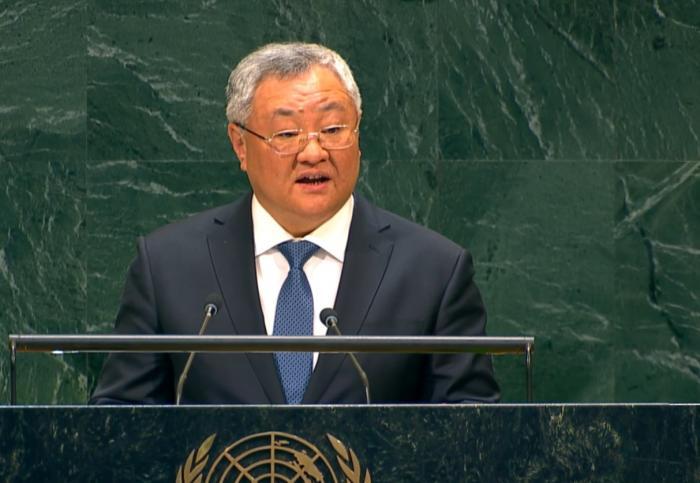
STATED THE CHINESE REPRESENTATION
The delegation of the People's Republic of China to the United Nations General Assembly condemned the economic, commercial, and financial blockade imposed by the United States against Cuba. It called for the lifting of all unilateral sanctions—including secondary sanctions—and for the removal of the island nation from the list of countries allegedly sponsoring terrorism.
The Chinese delegation expressed its support for the statements made by Uruguay, on behalf of the Group of 77 and China, and by Eritrea, representing the Group of Friends in Defense of the UN Charter.
In its remarks, the delegation highlighted two issues that, in its view, cannot be overlooked: the 64 years that the United States’ blockade and unilateral sanctions against Cuba have been in place, and the 34 years that have passed since the General Assembly first began calling for an end to this policy—calls that have yet to be implemented.
The Chinese representation maintained that the repeated adoption of the resolution by an overwhelming majority demonstrates the international community's commitment to justice. In this regard, it once again urged the U.S. government to end the blockade and cease exerting pressure on Cuba.
"There is no justification whatsoever for these illegal unilateral sanctions, which have been in place for 64 years, nor for ignoring this 34-year-old call for justice," it stated.
China announced that it would vote in favor of the draft resolution presented by Cuba, noting that these figures represent more than just spans of time: they serve as a lesson for the international community on the necessity of upholding justice and respecting the international order.
The delegation emphasized that all countries have the right to independently choose their own social system and path of development, in accordance with their own specific circumstances. "Choosing their own future is something that only the people of Cuba can decide," he emphasized.
Furthermore, he rejected external interference and the use of unilateral sanctions as instruments of pressure between states. He maintained that multilateralism should prevail over measures that have not been approved by the Security Council and which, he stated, lack any basis in international law.
Consequently, he called on the international community to demand the lifting of all sanctions against Cuba—including secondary sanctions—and for the country to be removed from the U.S. list of state sponsors of terrorism.
The Chinese delegation also questioned the use of economic blockades to hinder the development of other peoples and limit their right to meet their basic needs. "It is unacceptable to apply economic blockades that obstruct the right to subsistence and development of peoples in other countries," he asserted.
Finally, he reaffirmed that China will continue to support Cuba in defending its sovereignty, independence, and autonomy, as well as its right to development, and he advocated for strengthening international solidarity and cooperation to build a peaceful and prosperous world.
----------------------------------------------------------------------------------------------------
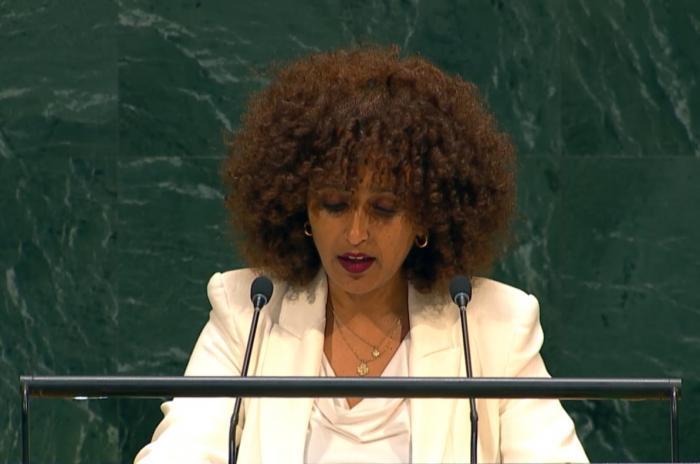
ETHIOPIA WARNS OF THE IMPACT OF THE ECONOMIC BLOCKADE ON ESSENTIAL SERVICES
Ethiopia’s delegation to the United Nations General Assembly reiterated its concern regarding the application of unilateral coercive measures against Cuba, noting that they create economic and humanitarian hardships, impair the availability of essential services, and limit the country’s participation in international and economic affairs.
At the outset of its statement, the Ethiopian delegation aligned itself with the remarks delivered on behalf of the African Group, the Non-Aligned Movement (NAM), and the Group of 77 and China.
"The peaceful settlement of disputes and respect for international law are fundamental principles of the United Nations Charter," the delegation stated, adding that unilateral measures inconsistent with this document should be scrutinized by the international community—particularly given their potential consequences for international cooperation and sustainable development.
The Ethiopian delegation warned that restrictions on access to essential supplies negatively affect the provision of basic services, hinder Cuba’s ability to achieve the Sustainable Development Goals (SDGs) and address its national priorities, and diminish its capacity to respond to the adverse effects of climate change.
Ethiopia reaffirmed its opposition to unilateral coercive measures against Cuba, in line with the principles of the United Nations Charter and the need to foster constructive international cooperation.
The delegation reiterated its call for the lifting of these restrictions and urged respect for international law and the UN Charter, in support of the well-being and sustainable development of the Cuban people.
----------------------------------------------------------------------------------------------------
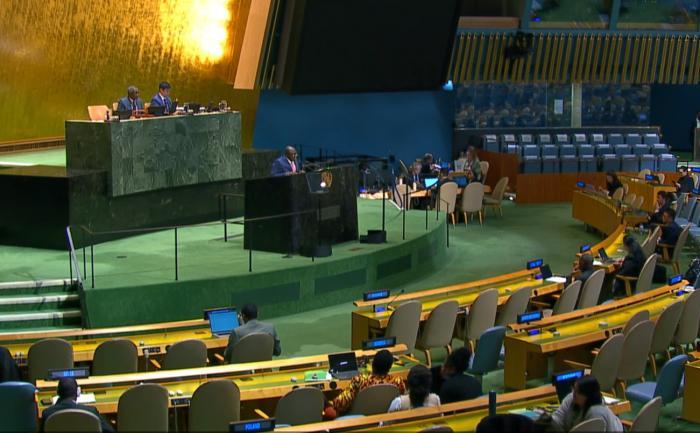
GAMBIA SUPPORTS LIFTING THE BLOCKADE AND HIGHLIGHTS CUBA’S MEDICAL COOPERATION WITH AFRICA
The representative of The Gambia reiterated his country’s support for the resolution presented to the United Nations General Assembly calling for an end to the blockade against Cuba, and urged that international efforts be redoubled to respond to the repeated calls for its removal.
He noted that restrictions on the potential for cooperation impose additional burdens on national economies and hinder the full fulfillment of the needs of their populations. Furthermore, he stated that The Gambia’s position is rooted in the principles and purposes of the United Nations Charter.
He underscored the importance of dialogue, mutual understanding, and international cooperation in supporting the socioeconomic development aspirations of all peoples.
Regarding the ties between The Gambia and Cuba, he highlighted the island nation’s contribution to his country’s sustainable development, particularly through medical assistance and the training of healthcare personnel. He also acknowledged Cuba’s solidarity with numerous developing nations—especially in Africa—as an expression of the spirit of South-South cooperation.
Finally, the Gambian representative reaffirmed his country’s commitment—as a member of the Non-Aligned Movement—to peaceful coexistence and the diplomatic resolution of differences. In this regard, he encouraged redoubled efforts, including the use of the UN Secretary-General’s good offices, to move toward the normalization of relations, emphasizing that dialogue is essential for achieving effective cooperation and lasting peace.
----------------------------------------------------------------------------------------------------
THE BLOCKADE ALSO UNDERMINES TRUST AND COOPERATION WITHIN THE INTERNATIONAL COMMUNITY
"More than six decades have passed since a commercial, financial, and economic blockade was imposed against Cuba—in stark contradiction to the principles that led to the establishment of the United Nations: sovereignty, sovereign equality, non-interference, and the pursuit of common prosperity," stated the Kenyan delegation.
For this reason, our Heads of State and Government—during a session of the African Union Assembly held in Addis Ababa in February 2026—reiterated their position, calling for the lifting of the sanctions imposed on the Cuban people and government, the official noted.
"This blockade not only violates Cuba’s right to development but also undermines the trust and cooperation that our international community so desperately needs within a rules-based multilateral order. Maintaining it serves neither justice nor international peace," he asserted.
"In accordance with the resolution of the African Union Assembly—and consistent with the position we have held over the years—Kenya will vote in favor of the resolution currently before us. We also hold onto the hope that this will be the final vote the Assembly is required to take on this matter."
----------------------------------------------------------------------------------------------------
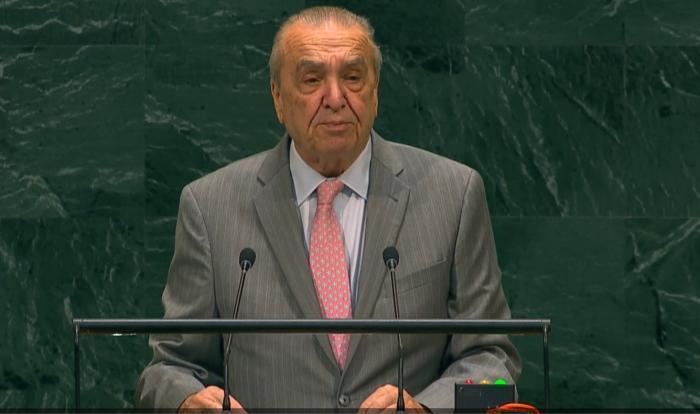
ALGERIA CALLS FOR DIALOGUE TO PRESERVE STABILITY AND PEACE
The representative of Algeria commended Cuba’s unwavering commitment to the principles of solidarity, dignity, and independence.
He noted that the economic, commercial, and financial blockade imposed on the island creates numerous difficulties for the Cuban people, restricts the country’s development efforts, and undermines its ability to achieve the Sustainable Development Goals by 2030.
He expressed his country’s deep concern regarding the serious socio-economic consequences of these unilateral coercive measures, which negatively impact Cuba’s sovereignty, self-determination, independence, and development.
Furthermore, the Algerian delegation stated that such measures are contrary to international law and to the principles and purposes enshrined in the United Nations Charter.
The representative reiterated Algeria’s firm conviction that dialogue, diplomacy, and the peaceful settlement of disputes constitute the only sustainable and realistic path to resolving differences, preventing escalation, and achieving security, peace, and stability.
Finally, he urged all parties to act with a high sense of responsibility to prevent Latin America and the Caribbean from being exposed to further instability or an increase in tensions.
----------------------------------------------------------------------------------------------------
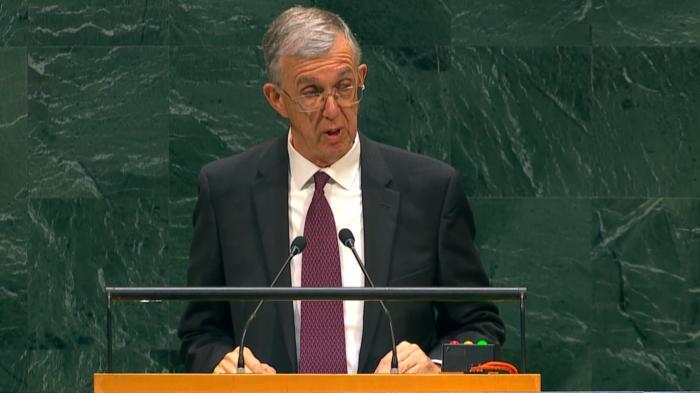
BRAZIL REAFFIRMS ITS VOTE IN FAVOR OF THE RESOLUTION ON CUBA
The Brazilian delegation highlighted that the resolution presented by the island nation addresses the extraterritorial effects on the sovereignty of third-party states—as well as the legitimate interests of their citizens and companies—in light of the principles of sovereign equality, non-intervention, and freedom of trade and navigation.
"Brazil has also publicly rejected the inclusion of Cuba on the United States' list of state sponsors of terrorism," it stated.
The South American nation’s representative to the UN affirmed that his country will vote in favor of the resolution. The objective that Brazil has repeatedly championed remains bringing an end to the blockade and ensuring that international relations based on dialogue and respect for the United Nations Charter prevail.
----------------------------------------------------------------------------------------------------
"THE TIME HAS COME TO PUT AN END TO THESE INHUMANE AND UNLAWFUL PRACTICES"
"This is the thirty-fourth time that this Assembly has reaffirmed its firm opposition to unilateralism, restrictions, and unilateral coercive measures imposed by a government that places itself above international law while continuing to violate it systematically and in a very grave manner," stated the Iranian delegation.
"Over the course of six decades of measures and a blockade imposed by the United States against Cuba, there has been ongoing coercion against an independent and sovereign state—coercion that has inflicted deep suffering upon its people, undermined their human rights, and hindered their development."
The intensification of this siege, "under the cynical guise of defending democracy, represents a profound contradiction between the stated objective and its devastating human consequences. It is a matter of weaponizing democracy rather than fostering it. No government has the right to dictate the political future of another sovereign state."
"This inhumane and unlawful blockade must come to an end. Furthermore, the Cuban people should receive reparations from the state that imposes it, accounting for all the damage caused within Cuba," the Iranian delegation noted.
"The Islamic Republic of Iran reiterates its unequivocal opposition to all sanctions against sovereign and independent states, including Cuba."
"The time has come to implement the resolutions adopted by the General Assembly with the overwhelming support of the international community. The blockade against Cuba must be rejected, and the United States must be called upon to end its economic, financial, and commercial blockade."
"International cooperation, sovereign equality, and friendly relations among nations are principles enshrined in Articles 1 and 2 of the Charter, and they must be respected." All of this is being trampled upon, as is the principle of non-interference. While the Charter calls for international cooperation to prevail in resolving problems—and for such cooperation to be fostered—unilateral coercive measures do the exact opposite, while also negatively affecting peaceful coexistence.”
“In fact, sanctions are an example of economic terrorism, while military-enforced blockades are acts of aggression under international law.”
In its statement, Iran reaffirmed its “unwavering solidarity with the government and the resilient people of Cuba in their struggle against the blockade and other unjust coercive measures. We will continue to advocate for the elimination of these unilateral coercive measures, and we urge the Assembly to redouble its efforts to ensure that these measures—including the blockade against Cuba—are brought to an immediate end.”
“The time has come to put an end to these inhumane and unlawful practices. Their continuation is not only a failure of our collective responsibility, but also an unequivocal manifestation of moral and humanitarian atrocity.”
IT IS IMPERATIVE TO PUT AN END TO THE BLOCKADE
Uruguay, speaking on behalf of the G-77 and China, expressed concern regarding the impact of the blockade on the Cuban people, as well as its extraterritorial expansion—most notably through the full implementation of Title III of the Helms-Burton Act.
"The application of this law is a clear violation of the freedom of trade between nations, given its intent to intimidate any commercial transaction or investment between any country and Cuba. The targeting of Cuban financial transactions within the jurisdictions of third-party countries has had a massive chilling effect in economic terms—a trend that has persisted," it stated.
"Limited foreign investment and restricted access to development credit translate directly into economic hardship and humanitarian suffering for the Cuban people. As a result of these unilateral measures, it will be impossible for Cuba to successfully pursue the path toward sustainable development as envisioned in the 2030 Agenda for Sustainable Development—an agenda that all member states have committed to supporting," it maintained.
"Regarding the U.S. government’s announcement of new measures to further tighten the economic, commercial, and financial blockade against Cuba—including actions aimed at obstructing the country’s oil supply and the imposition of sanctions on third-party countries that maintain legitimate commercial relations with Cuba (measures with clear extraterritorial effects)—the group emphasizes that these actions contravene the principles and purposes of the United Nations Charter and international law. Furthermore, they undermine multilateralism, international economic cooperation, and a rules-based international order—one that is non-discriminatory, open, fair, and equitable, with the World Trade Organization at its core."
It was further noted that this situation exacerbates the difficulties Cuba faces in conducting financial and commercial operations, thereby threatening the livelihood and well-being of the Cuban population. "The G77 and China are deeply concerned about the serious humanitarian and development consequences that these restrictions on energy access have for Cuba."
The Group further urged that the Caribbean nation be removed from the list of countries allegedly sponsoring terrorism.
"Cuba is a long-standing, active partner of the Group’s members in promoting South-South cooperation. Thanks to Cuba’s efforts, many countries within the Group have developed their scientific and technical potential. All we have ever known from Cuba is friendship and solidarity."
The inclusion of Cuba on that list is one of the factors that reinforces the blockade. Consequently, it has been extremely difficult for the island to engage in international banking transactions—whether state-run or private—which has had very serious repercussions for the development of the Cuban people, it noted.
"The Group acknowledges the positive, long-standing contribution of Cuba’s international medical cooperation and its solidarity in saving the lives of millions of people worldwide—particularly, though not exclusively, in developing countries. Cuba has contributed to the international community for decades. Its assistance to other nations serves as an exemplary model of South-South cooperation."
In light of this, the organization rejected all unilateral coercive measures, as well as any attempt to undermine such international medical cooperation and solidarity for political or other reasons. Furthermore, it reiterated that there can be no sustainable development without peace, nor can there be peace without sustainable development.
"It is imperative that the blockade be lifted—especially considering that this marks the thirty-fourth time the General Assembly has adopted a resolution calling for this. The Group, therefore, urges that the blockade be lifted completely and unconditionally, including all measures that carry extraterritorial effects." "Ending these restrictions is not only fundamental to Cuba’s development and the well-being of its people, but also to respect for the United Nations Charter and the credibility of multilateralism," he stated.
-----------------------------------------------------------------------------------------------------------------------
THE BLOCKADE AGAINST CUBA IS A HUMAN RIGHTS ISSUE
Speaking on behalf of the African Group, the representative of Namibia reaffirmed this Tuesday its long-standing position against the economic, commercial, and financial blockade imposed by the United States on Cuba, during the General Assembly debate preceding the vote on a Cuban-sponsored draft resolution.
In its statement, the African delegation recalled that for years, "this Assembly has issued a call, supported by an overwhelming majority," to end the blockade. It further noted that, last July, the body agreed to revisit the issue as part of an additional debate, given the gravity of the situation and the cumulative deterioration. "The concern remains as strong as ever," the representative stated.
The African Group pointed to the most recent report by the UN Secretary-General on Cuba, which documents "unparalleled damage to the economy," particularly in the areas of healthcare, food production, transportation, and energy generation.
Fuel restrictions, the representative noted, have led to prolonged blackouts across the island, while essential services and hospitals face significant operational challenges.
Furthermore, the group expressed concern regarding the extraterritorial consequences of these measures, which hinder legitimate financial and commercial transactions between banks and companies from third countries and Cuba—in violation of international rules governing trade between states.
In this regard, the representative cited Sustainable Development Goal 15, warning that such effects "undermine international cooperation and create additional obstacles to the achievement of the SDGs."
Africa’s position, the representative emphasized, "is clear and settled." In February 2026, the African Union Assembly of Heads of State and Government—for the 17th consecutive year—reaffirmed its call to lift the blockade. The group also expressed concern over Cuba’s inclusion on a unilateral list of countries allegedly sponsoring terrorism—a list that the African Group advocates for abolishing. The statement evoked historical ties of solidarity: Cuba’s support for African peoples in their struggles for freedom and independence; the work of Cuban doctors during the 2014 Ebola outbreak; the ongoing contributions of Cuban physicians and educators on the continent; and the training of numerous African professionals at Cuban universities.
The African Group affirmed its commitment to Cuba’s sovereignty and territorial independence in accordance with international law, maintaining that differences between states should be resolved through dialogue, mutual respect, and sovereign equality. It also expressed its welcome regarding the potential resumption of talks between Cuba and the United States.
"The African Group will vote in favor of the draft resolution"—and encourages all members of this Assembly to do the same—the statement declared, while also calling for the blockade to be lifted "in its entirety, so that Cuba may pursue its independence in peace and dignity."
It further emphasized that the blockade is not merely a political or economic issue, but one that "concerns human rights and dignity," and characterized unilateral coercive measures as genocidal in nature, as they undermine the sovereignty of states and the self-determination of peoples.
-----------------------------------------------------------------------------------------------------------------------
The representative of Uganda spoke on behalf of the 120 member states of the Non-Aligned Movement (NAM) and recalled the overwhelming support and solidarity that the General Assembly has historically expressed toward the people of Cuba.
Each October, the vast majority of the organization’s member states have voted in favor of the resolution. Regrettably, despite this clear mandate from the General Assembly, the Non-Aligned Movement has observed that the blockade against Cuba has intensified in recent months—a serious obstacle to the normalization of relations between the two countries, the representative noted.
In this regard, the NAM expressed its deep concern over measures announced by the United States government this year, which amount to an unprecedented blockade against the Republic of Cuba. These include actions to obstruct fuel supplies to the country, penalize nations that maintain commercial ties with Cuba, and impose sanctions on foreign companies, banks, and entities—even when their business dealings within the United States are unrelated to Cuba.
"These measures," the representative stated, "expand the extraterritorial reach of the blockade and adversely affect not only Cuba and its people but also third-party states and international economic relations. They constitute a flagrant violation of the purposes and principles of the United Nations Charter, international law, the multilateral trading system, and the principles and norms governing friendly relations among states."
The representative of Uganda also voiced concern regarding the mounting humanitarian harm caused by the most recent unilateral coercive measures against the Cuban people—which amount to a form of collective punishment—as well as their devastating impact on all critical sectors of the Cuban economy, including healthcare, the education system, electricity supply, nutrition, agriculture, trade, and the daily lives of ordinary Cubans. In this regard, he emphasized the oil blockade, which has had very serious consequences for electricity generation and the operation of essential public services. "Prolonged blackouts have affected hospitals, schools, water distribution systems, and food storage facilities."
"Public transport services have faced major disruptions, while agricultural production and food distribution networks have been severely impacted. Cuba has received only one oil tanker over the last 10 months," he stated.
"During this period, more than 40 foreign banks have refused to conduct transactions with Cuba, while over 140 international bank transfers have been blocked—including payments for the acquisition of solar and wind energy technology," it reported.
In this regard, the Movement reiterated its call for the United States government to end the economic, commercial, and financial blockade against Cuba—which constitutes a major obstacle to the country’s full development—and to remove the additional unilateral measures imposed since 2017, including the unilateral and arbitrary designation of the island as a state sponsor of terrorism.
"The Non-Aligned Movement (NAM) recognizes that Cuba poses no threat to international peace and security, and highlights the positive contribution of Cuba’s international medical cooperation and its solidarity in saving the lives of millions of people worldwide, as well as its efforts to promote peace at both the regional and international levels."
It also expressed opposition to any acts or threats of aggression, or the use of force against the territorial integrity or political independence of any nation. "The Non-Aligned Movement urges the General Assembly—as the most representative body of the United Nations—to mobilize efforts to prevent military aggression against Cuba, a founding member of our Movement, and to uphold peace."
Furthermore, it recalled the declaration of Latin America and the Caribbean as a Zone of Peace, which was adopted in Havana in 2014. "We reiterate that all countries must refrain from exerting pressure or coercion upon other nations—including acts of aggression or any action involving the use of force, whether direct or indirect—and from applying or promoting any unilateral coercive measures that contravene the international order, with the intent of compelling a state to subordinate its sovereign rights or to extract any form of benefit." The Non-Aligned Movement (NAM) called on the international community to continue working together to eliminate the economic, commercial, and financial blockade imposed by the United States against Cuba—given its illegal nature and extraterritorial consequences—and urged the U.S. government to refrain from any escalation directed against the sovereignty, territorial integrity, political independence, and self-determination of the Cuban people.
-----------------------------------------------------------------------------------------------------------------------
The total cost of the damages inflicted upon Cuba by the blockade—for the period from March 1, 2025, to February 28, 2026—reached a record figure of US$8,083,300,000.
Order of speakers for the debate on the blockade against Cuba. The list includes countries speaking in positions 27 through 37. The vote is scheduled for today, Wednesday, October 28, 2026.
This Wednesday, October 28, the United Nations General Assembly is holding a session regarding the draft resolution that calls for an end to the economic, commercial, and financial blockade imposed by the United States against Cuba.
ORDER OF SPEAKERS AS LISTED ON THE AGENDA, STARTING AT 10:00 AM
27. Mexico
28. India
29. Cabo Verde
30. Zambia
31. Viet Nam
32. Sierra Leone
33. Ghana
34. Egypt
35. Belize
36. Mozambique
37. Cuba
Important: The vote on the resolution will take place following these statements.
Follow the session live via the UN:
https://webtv.un.org/


